
“If thou wouldst lead a good life, love righteousness, and hate injustice.”

About
Alfred the Great was the king who stood when others fled. Ruling Wessex in the 9th century, he held off Viking invasions that threatened to erase Anglo-Saxon England. More than a warrior, Alfred was a scholar-king who promoted education, reformed laws, and translated Latin texts to preserve knowledge for his people. He built schools, a navy, and a vision of a united English nation. In an age of chaos, Alfred combined courage with wisdom, earning a title no other English monarch holds: “the Great.”
Place of Birth
Wantage, Oxfordshire, Anglo-Saxon England
Birthday
849 AD
Death
October 26, 899 AD in Winchester, England
Legacy
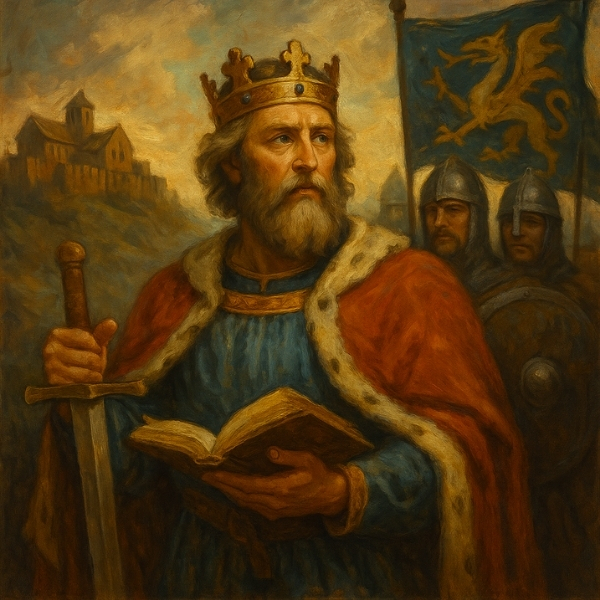
Alfred the Great was the King of Wessex who successfully defended Anglo-Saxon England from Viking invasions and laid the foundation for the unification of England. As the only English monarch to be called “the Great,” he is remembered for his wisdom in warfare, leadership in education, and deep devotion to justice and Christian principles. His reign marked a turning point in English history, preserving Anglo-Saxon culture and identity during an era of violent upheaval.
Influence
Alfred’s influence extended into law, language, and national identity. He reformed the legal code, promoted literacy in English rather than Latin, and translated important texts himself to educate his people. His leadership preserved not only his kingdom but also the cultural integrity of early England. His vision and reforms paved the way for later monarchs and the eventual formation of a unified English nation.

Values & Beliefs
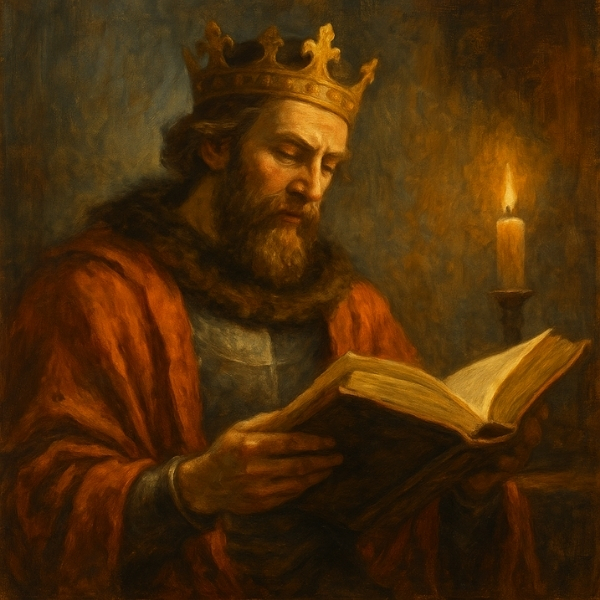
Alfred valued wisdom, justice, piety, and perseverance. A deeply religious man, he believed rulers must serve their people with humility and moral purpose. He saw education and law as divine tools for order and peace. Balancing sword and scripture, Alfred championed learning, righteousness, and resilience in the face of adversity.
Most Famous For:
Defending Wessex and pushing back the Viking invasions
Founding a system of fortified towns (burhs) for protection
Promoting education and translating major works into Old English
Establishing a legal code rooted in Christian ethics and equity
“A king must not only care for his land and people, but also for his soul.”
 Ethan Townzen