
“To live alone is the fate of all great souls.”

About
In a world drunk on progress, Schopenhauer whispered the truth of suffering. Solitary by nature and stormy in thought, he looked beneath the surface of reason and found the restless will, the ceaseless hunger that drives all life. From this dark insight, he carved a path toward clarity: in silence, in art, in turning away from the noise of desire. Ignored in his time, but revered by generations to follow, Schopenhauer became a beacon for those brave enough to face the shadows and seek peace not in conquest, but in quiet understanding.
Place of Birth
Danzig, Prussia (modern-day Gdańsk, Poland)
Birthday
February 22, 1788
Death
September 21, 1860 in Frankfurt, Germany
Legacy
Arthur Schopenhauer was a German philosopher known for his pessimistic worldview and his emphasis on the irrational aspects of human existence. His seminal work, The World as Will and Representation, introduced the concept of the “will” as the driving force behind all life and suffering. Though largely overlooked in his lifetime, Schopenhauer’s ideas gained major recognition later and deeply influenced modern philosophy, psychology, and literature.
Influence
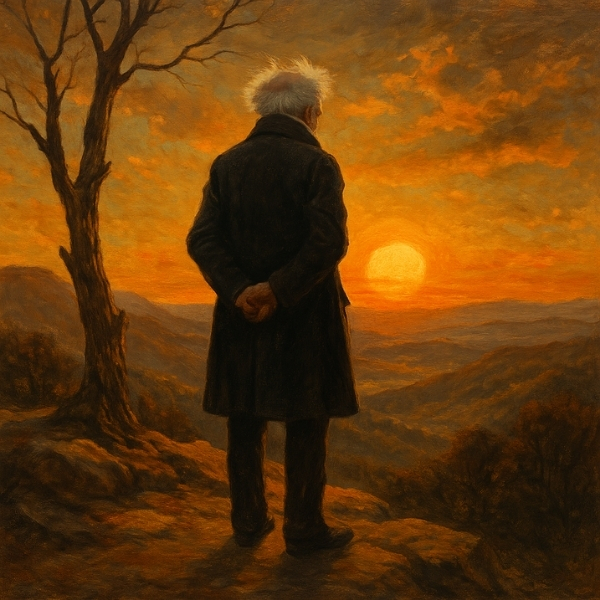
Schopenhauer had a profound impact on thinkers such as Friedrich Nietzsche, Sigmund Freud, Albert Einstein, and Leo Tolstoy. He introduced Eastern philosophical ideas, particularly from Buddhism and Hinduism, into Western thought and laid intellectual groundwork for existentialism, psychoanalysis, and modern art and music (especially Wagner).
Values & Beliefs
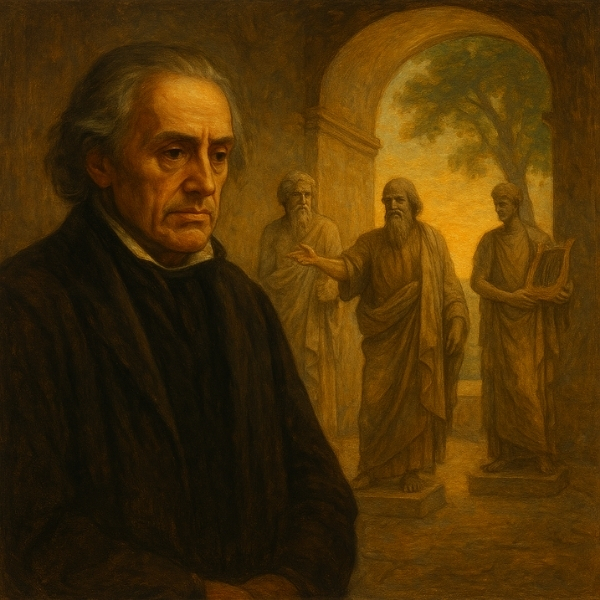
Schopenhauer believed that human existence is driven by an irrational, blind will, and that suffering is rooted in endless striving. He valued asceticism, self-denial, compassion, and intellectual contemplation as means to transcend suffering. He urged people to detach from desires and find peace through reflection, art, and acceptance of life’s tragic nature.
Most Famous For:
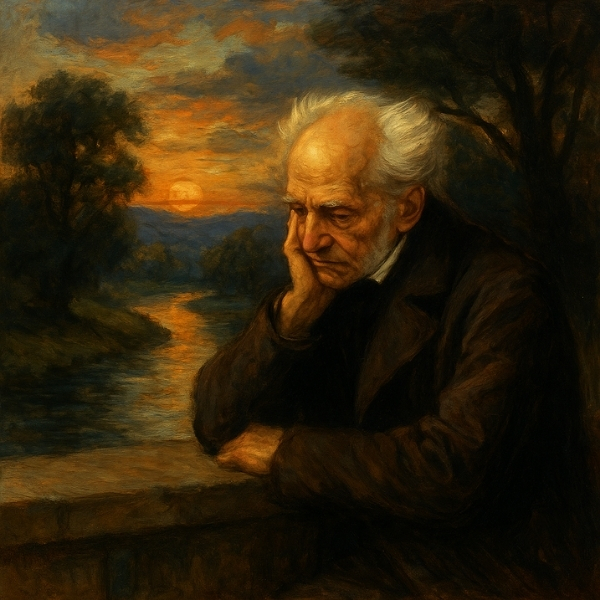
Emphasizing the role of suffering and desire in human life
Bridging Western and Eastern philosophical thought
Influencing existentialism, psychology, and the arts
“A man can do what he wants, but not want what he wants.”
 Ethan Townzen