
“All men are my children. What I desire for my own children, I desire for all men.”

About
Once a ruthless conqueror, Ashoka stood over the ashes of war and chose a different legacy: peace. Haunted by the horrors of Kalinga, he turned inward and emerged transformed, a warrior of the spirit. Embracing Buddhism, he ruled not with fear but with compassion, carving edicts into stone that spoke of mercy, tolerance, and care for all beings. His reign became a beacon of ethical leadership, where the power of the crown bowed to the call of conscience. In choosing dharma over domination, Ashoka became not just a king, but a guide for centuries to come.
Place of Birth
Pataliputra (modern-day Patna, India), Maurya Empire
Birthday
304 BCE
Death
232 BCE in Pataliputra, Maurya Empire
Legacy
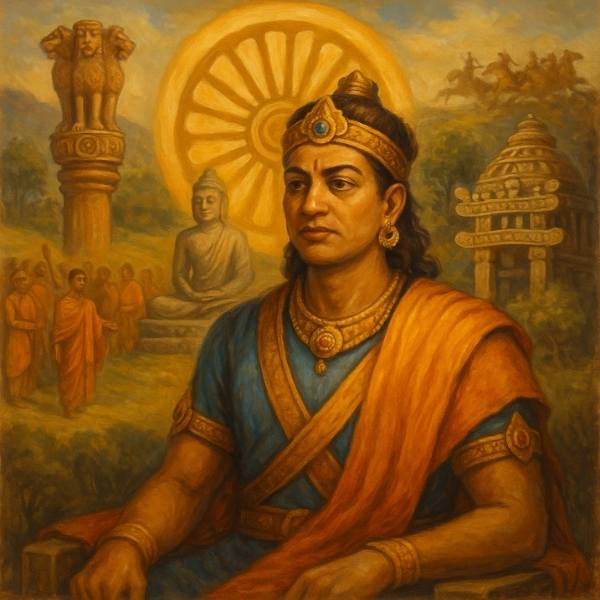
Ashoka the Great was the third emperor of the Maurya Dynasty and is widely regarded as one of the greatest rulers in Indian and world history. After witnessing the brutal destruction of the Kalinga War, he experienced a profound transformation and became a devoted advocate of Buddhism and nonviolence. His reign marked a golden era of ethical governance, tolerance, and cultural flourishing, leaving behind a legacy of compassion and statecraft rooted in moral principle.
Influence
Ashoka’s influence extended far beyond his empire. He helped spread Buddhism across Asia, sending emissaries and missionaries as far as Sri Lanka, Central Asia, and the Mediterranean. His edicts, inscribed on stone pillars and cave walls, represent one of the earliest written expressions of religious tolerance, humanitarian values, and ethical governance. His impact continues to shape Indian identity and Buddhist philosophy to this day.

Values & Beliefs
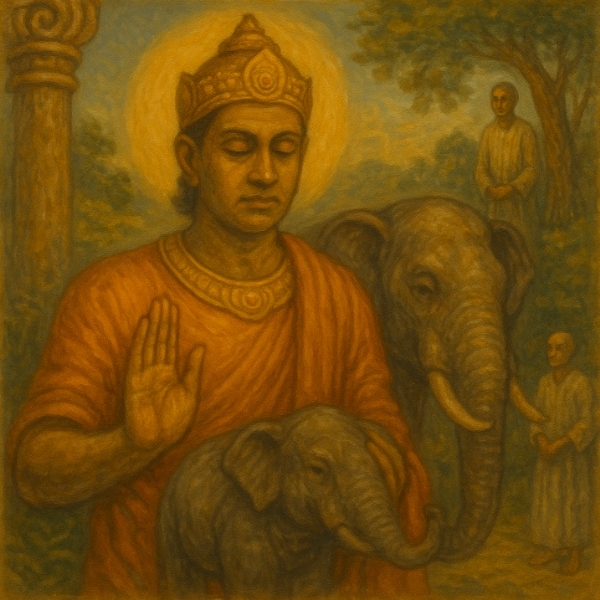
Ashoka championed dharma (righteous conduct), nonviolence (ahimsa), religious tolerance, and the well-being of all living beings. He believed rulers should serve as moral examples, caring for their people with humility and justice. Ashoka emphasized personal reflection, compassion, and peaceful coexistence, values he implemented through public welfare projects, environmental care, and spiritual guidance.
Most Famous For:
Transforming from a fierce conqueror to a peaceful, ethical ruler
Spreading Buddhism throughout Asia through missions and diplomacy
Issuing the Ashokan Edicts—inscriptions of moral and spiritual guidance
Promoting religious tolerance, welfare, and ethical leadership
“The only true conquest is the conquest of the heart.“
 Ethan Townzen