
“The more you struggle to live, the less you live. Give up the notion that you must be sure of what you are doing. Just take action.”

About
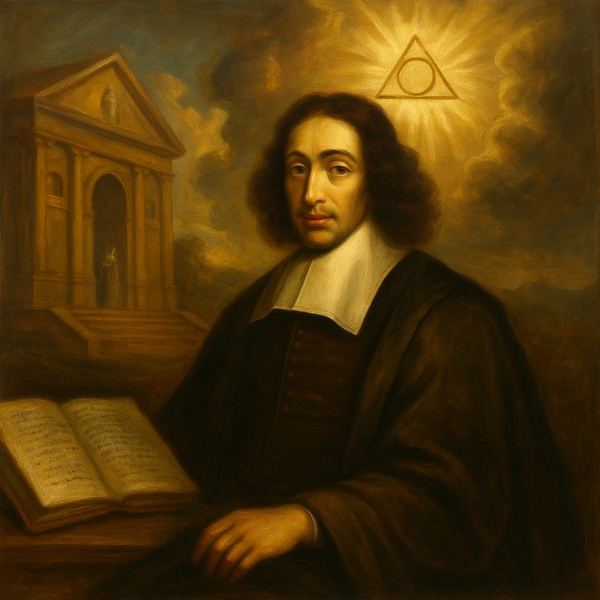
Cast out for thinking too freely, Spinoza lived quietly, polishing lenses by day and ideas by night. In the stillness of exile, he crafted a vision of the divine not in heaven, but in nature in all things. For him, God was not a ruler but reality itself, infinite and unfolding. He taught that freedom lies not in defiance, but in understanding that peace comes when we see ourselves as part of the whole. Unmoved by fame, untouched by fear, Spinoza chose a life of clarity over comfort, and in doing so, lit the path for an age of reason.
Place of Birth
Amsterdam, Netherlands
Birthday
November 24, 1632
Death
February 21, 1677 in The Hague, Netherlands
Legacy
Baruch Spinoza was a Dutch philosopher of Sephardic Jewish origin whose radical ideas helped lay the groundwork for the Enlightenment. His magnum opus, Ethics, proposed a vision of God, nature, and reason that challenged traditional religious dogma. Spinoza was excommunicated from his Jewish community for his views, but today he is recognized as one of the most original and influential thinkers of modern philosophy.
Influence
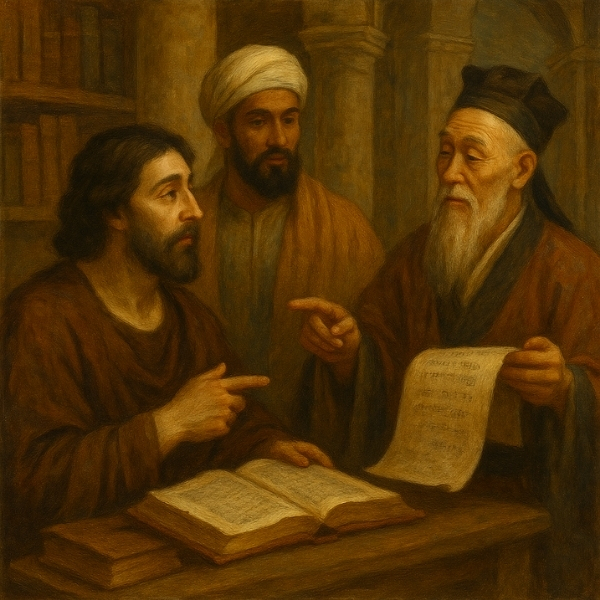
Spinoza influenced countless philosophers including Hegel, Nietzsche, Einstein, and modern rationalists. His emphasis on reason, determinism, and the unity of all existence shaped Enlightenment thought, religious criticism, and secular ethics. His work bridges metaphysics, morality, and emotional clarity, inspiring modern ideas about freedom, tolerance, and the power of understanding.
Values & Beliefs
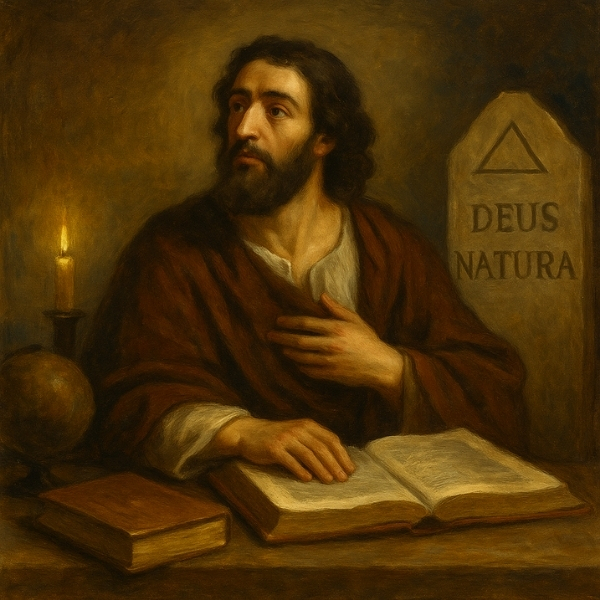
Spinoza believed in intellectual freedom, ethical living through reason, and a pantheistic view of God as identical with nature. He argued that understanding the natural order leads to peace and virtue. He rejected supernaturalism, believing that emotions could be mastered through knowledge, and that happiness comes from aligning oneself with truth and necessity.
Most Famous For:
Writing Ethics, one of the most influential philosophical works of all time
Redefining God as nature itself (pantheism)
Advocating reason, tolerance, and intellectual freedom
Being a precursor to the Enlightenment and secular philosophy
“The free man thinks of nothing less than of death, and his wisdom is a meditation on life.”
 Ethan Townzen