
“God grant me the courage not to give up what I think is right even though I think it is hopeless.”

About
In the vast silence of the Pacific, Chester Nimitz stood as a calm in the storm… not loud, not boastful, but unwavering. When hope was dim and odds were long, he held the line with clarity and courage. At Midway, he turned the tide of a world war not with bluster, but with belief, in strategy, in duty, in his people. A man of quiet conviction, he led from the helm with humility and strength, always mindful of the lives behind every order. Nimitz proved that true leadership isn’t forged in fire, it’s revealed in it.
Place of Birth
Fredericksburg, Texas, United States
Birthday
February 24, 1885
Death
February 20, 1966, San Francisco, California, United States
Legacy
Fleet Admiral Chester W. Nimitz was one of the most important naval commanders in American history. As Commander in Chief of the U.S. Pacific Fleet during World War II, he led U.S. naval forces to decisive victories against the Japanese Empire, including the pivotal Battle of Midway. His strategic brilliance, calm leadership, and modern naval tactics helped turn the tide of war in the Pacific. Nimitz later oversaw the postwar restructuring of the Navy and remains a symbol of strength, integrity, and service.
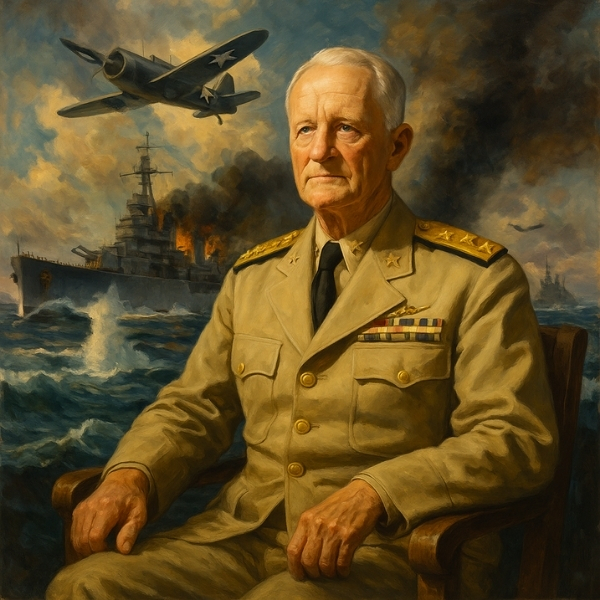
Influence
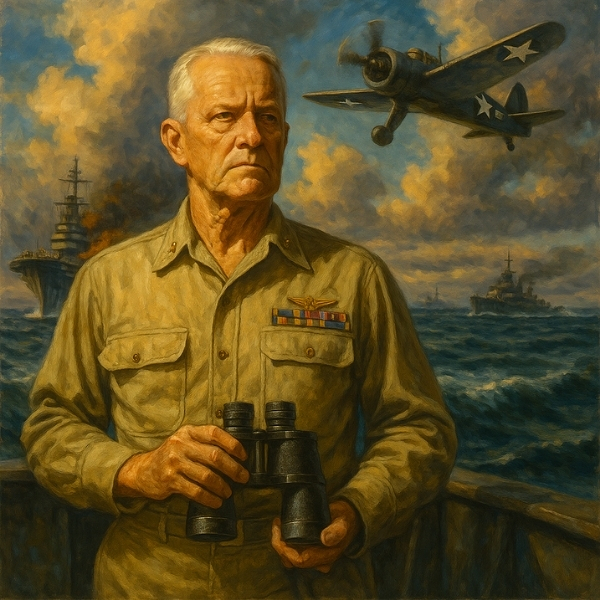
Nimitz revolutionized naval warfare through his mastery of aircraft carrier strategy, logistics, and long-range planning. He balanced aggressive offense with caution, earning the trust of both his superiors and subordinates. His leadership during the Pacific campaign established America as a dominant naval power. Postwar, he served as Chief of Naval Operations and was instrumental in rebuilding Japan’s maritime forces and promoting peaceful Pacific relations.
Values & Beliefs
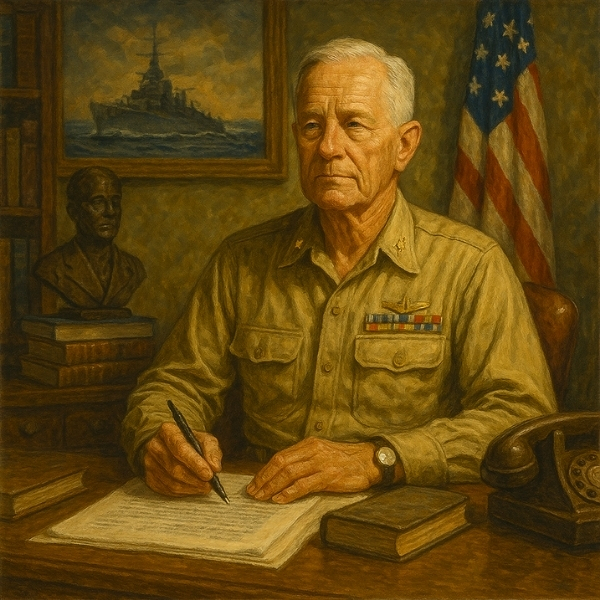
Nimitz valued duty, discipline, humility, and quiet resolve. He believed in empowering his officers, promoting innovation, and leading by example. A modest man with great intellect, he placed country above ego and saw military service as a sacred trust. He held deep respect for both the burden of command and the human cost of war, striving for decisive victory while minimizing unnecessary suffering.
Most Famous For:
Leading the U.S. Navy to victory in the Pacific Theater during WWII
Commanding the Battle of Midway, a turning point in the war
Overseeing the surrender of Japan aboard the USS Missouri
Becoming one of only four Fleet Admirals in U.S. Navy history
“Leadership consists of picking good men and helping them do their best.”
 Ethan Townzen