
“It does not matter how slowly you go as long as you do not stop.”

About
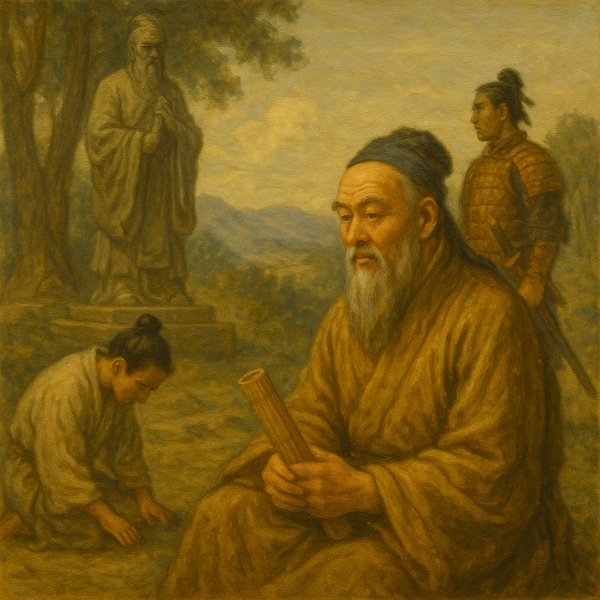
In an age of chaos, Confucius walked a quieter path, one of patience, ritual, and inner reform. He taught not through force, but through example, believing that greatness begins with the self and radiates outward through family, community, and state. With ink and insight, he carved the moral spine of a civilization, teaching that to lead is first to learn, and to live well is to act with dignity. Though centuries have passed, his voice still whispers in the rhythm of respect, reminding us that slow steps, rightly taken, shape the destiny of a nation.
Place of Birth
Qufu, State of Lu (modern-day Shandong Province, China)
Birthday
September 28, 551 BCE
Death
479 BCE
Legacy
Confucius is one of the most influential thinkers in Chinese history and the founder of Confucianism. His teachings laid the foundation for Chinese social, political, and educational systems for over two thousand years. He emphasized the importance of moral integrity, familial respect, and proper behavior in personal and public life.

Influence
Confucius’ ideas deeply shaped East Asian cultures, including Korea, Japan, and Vietnam. His philosophies influenced civil service exams, education, family structure, and governance. He also left a significant mark on later thinkers and movements, both within and outside China, including neo-Confucianism and even Enlightenment-era Western philosophers.

Values & Beliefs
Confucius believed in cultivating virtue through personal effort, learning, and proper conduct. Core values include filial piety (respect for parents and elders), ren (benevolence or humaneness), li (ritual/propriety), yi (righteousness), and zhì (wisdom). He stressed that harmony in society begins with self-discipline and ethical leadership.
Most Famous For:
Founding Confucianism
Promoting ethical governance and moral leadership
Shaping family and societal structure in East Asia
The Analects, a collection of his sayings and teachings
“The man who moves a mountain begins by carrying away small stones.”
 Ethan Townzen