
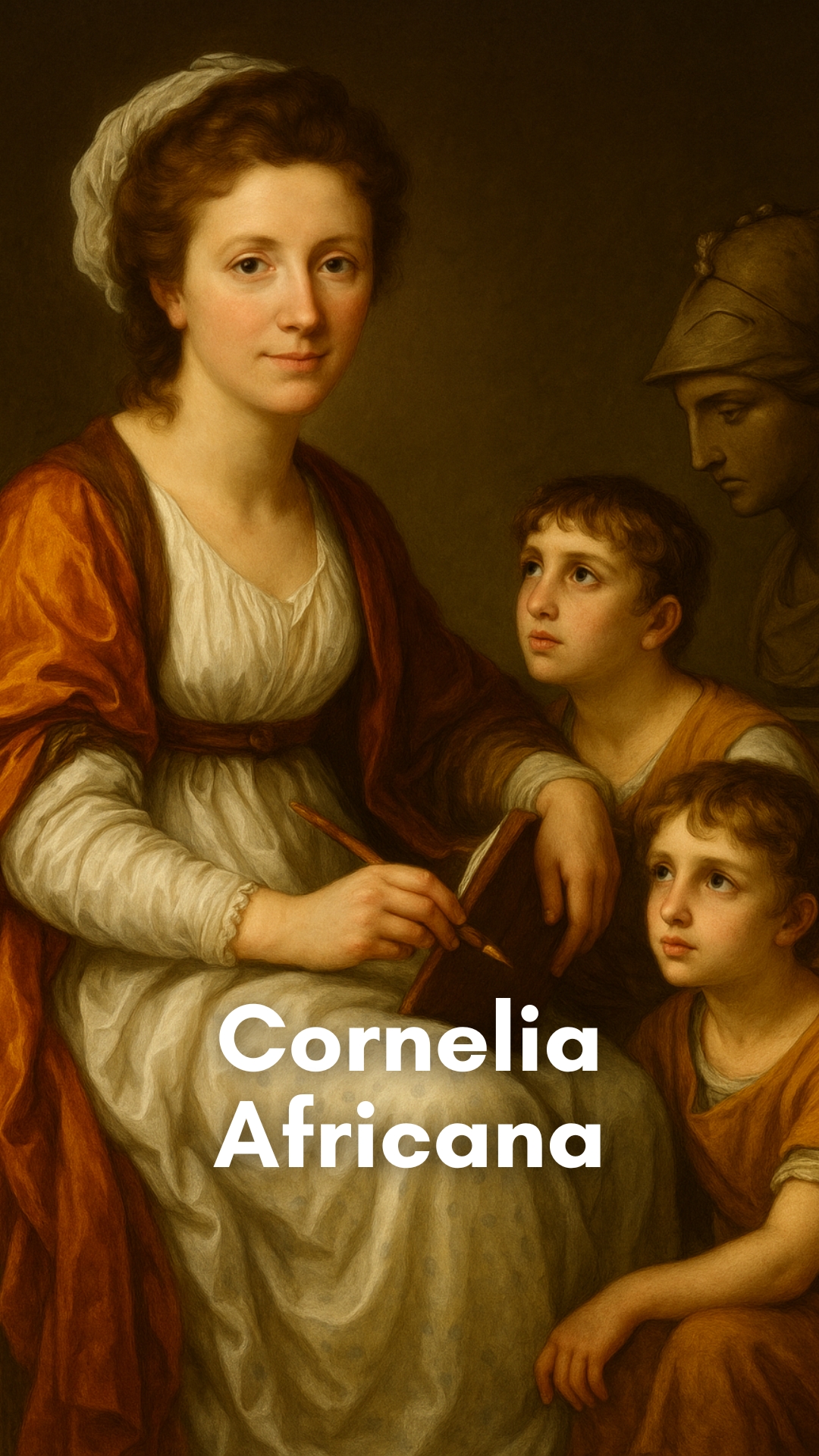
“These are my jewels.”
(Referring to her sons, Tiberius and Gaius Gracchus, when asked about her lack of fine jewelry.)
About
Cornelia Africana was a noble Roman matron, daughter of Scipio Africanus (the famed general who defeated Hannibal), and mother of the reformist Gracchi brothers, Tiberius and Gaius. Though she never held office, her wisdom, virtue, and maternal influence made her one of the most admired women in Roman history. She became a model of Roman womanhood, celebrated for her intellect, dignity, and strength of character.
Place of Birth
Rome, Roman Republic
Birthday
190 BCE
Death
100 BCE in her villa in Misenum (modern-day Miseno, Italy)
Legacy
Cornelia’s legacy is one of moral integrity, maternal devotion, and civic virtue. In a society that valued modesty and honor, she stood out as a paragon of Roman feminine ideals. After the deaths of her sons, who were both martyred for their attempts to reform the Republic, Cornelia remained composed and proud, defending their memory. Statues were erected in her honor, and later Roman women were taught to emulate her example.

Influence
Cornelia’s life and words influenced Roman culture, especially in how the roles of women and mothers were viewed. She set a precedent for women as active contributors to political and ethical life… not through power, but through education, virtue, and influence. Her legacy has resonated throughout Western history as a symbol of strength through nurturing and principled conviction.

Values & Beliefs
Cornelia valued education, moral integrity, and public service. She instilled in her children a sense of duty to Rome and emphasized civic responsibility over wealth or status. She believed that a mother’s greatest legacy was the character and contribution of her children, and she lived simply, with dignity and pride. Her belief in republican values and honor above personal gain shaped the ideals of Roman aristocracy.

Most Famous For:
Being the daughter of Scipio Africanus and mother of the Gracchi brothers
Famously saying “These are my jewels” about her sons
Serving as the model of Roman matronly virtue and Stoic strength
Supporting republican values through education and civic-minded parenting
Being commemorated in Roman literature and sculpture as a symbol of female dignity
“I taught my sons to be worthy of their ancestors.”
 Ethan Townzen