
“The darkest places in hell are reserved for those who maintain their neutrality in times of moral crisis.”

About
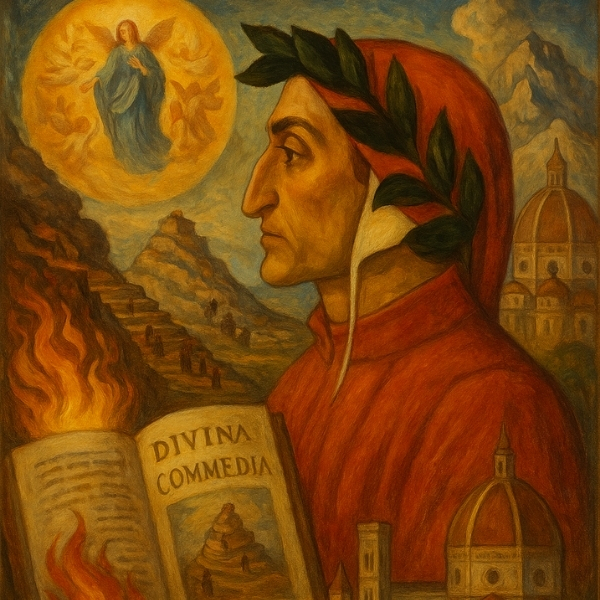
Exiled from his beloved Florence, Dante wandered not just through cities, but through the soul of the world. With pen in hand and heaven in mind, he mapped eternity, casting sinners into flame, guiding pilgrims through purgation, and lifting eyes to the stars. The Divine Comedy was his reckoning, his revolt, and his redemption. In a world torn by corruption and conflict, he dared to demand moral clarity and divine justice. Through inferno and beyond, Dante showed that even in exile, a soul can rise, and that truth, once spoken in fire, echoes forever.
Place of Birth
Florence, Italy (Republic of Florence)
Birthday
May 26, 1265
Death
September 14, 1321 (Ravenna, Papal States)
Legacy
Dante is widely considered the “Father of the Italian language” and one of the greatest literary figures in Western history. The Divine Comedy: comprising Inferno, Purgatorio, and Paradiso, profoundly influenced Christian theology, Renaissance art, and literary traditions across the world. His complex vision of the afterlife merged classical philosophy with Christian doctrine, forever shaping how the West visualizes heaven, hell, and redemption.
Influence
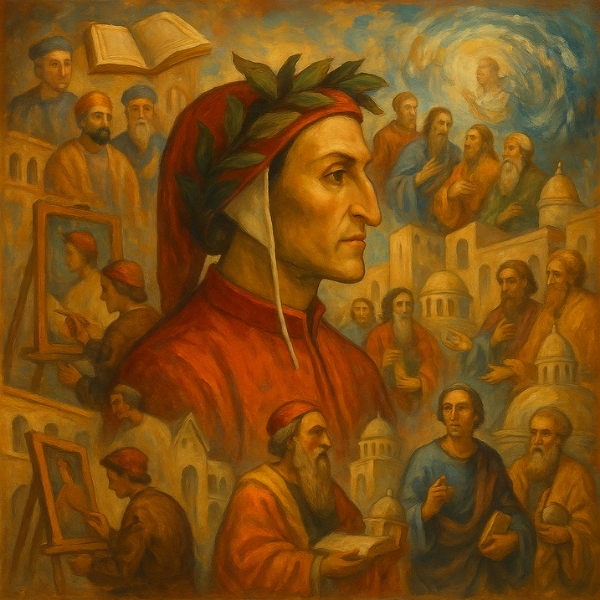
Dante’s influence stretches across centuries, inspiring writers such as Geoffrey Chaucer, T.S. Eliot, and James Joyce. His vivid allegories and moral clarity laid the groundwork for narrative poetry, theological reflection, and humanist thought. Artists like Botticelli, Michelangelo, and Dali depicted his visions, while philosophers and theologians continue to interpret his work as a bridge between antiquity and modernity.
Values & Beliefs
Dante believed in the transformative power of justice, knowledge, and divine love. He upheld the moral responsibility of individuals and leaders to pursue truth and virtue. Deeply religious yet politically critical, Dante used poetry as a means of philosophical and spiritual exploration, advocating for righteousness, reason, and the soul’s ascent through faith and wisdom. His work reflects a deep concern for order, purpose, and moral clarity.

Most Famous For:
Writing The Divine Comedy, a masterpiece of world literature
Popularizing vernacular Italian, making literature accessible to the public
Defining vivid depictions of Hell, Purgatory, and Heaven still referenced today
Shaping theological and philosophical views of sin, redemption, and divine justice
recognized as the father of the Italian language
“Consider your origin. You were not formed to live like brutes, but to follow virtue and knowledge.”
 Ethan Townzen