
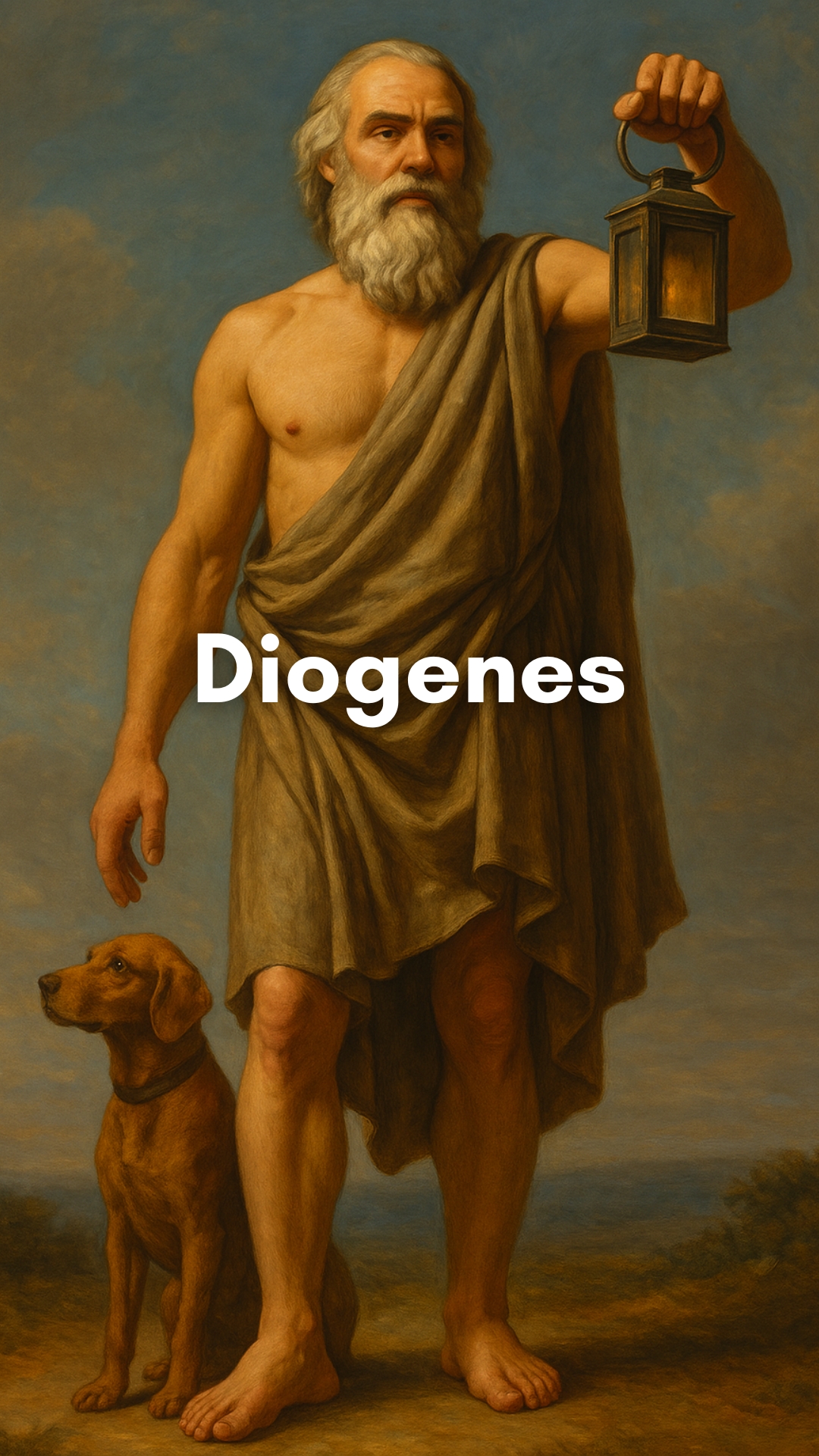
“I am looking for an honest man.”
About
He carried no scrolls, wore no robes, just a lantern in daylight and a scorn for pretense. Diogenes turned philosophy into protest, stripping life to its core and daring others to see how absurd their comforts had become. He lived in a barrel, mocked kings, and called out hypocrisy with fearless humor. To him, virtue was freedom from wealth, from shame, from illusion. No palace, no possession, no polite lie could tempt him. In a world chasing status, Diogenes walked barefoot and free.
Legacy
Diogenes was a founder of Cynicism, a school of thought that rejected conventional desires for wealth, power, and status in favor of virtue, self-sufficiency, and living in harmony with nature. Known for his sharp wit and bold behavior, he left a legacy that challenged societal norms and continues to provoke thought about what really matters in life.
Influence
Though he wrote no books, Diogenes’ life was his philosophy. His example deeply influenced later schools like Stoicism, especially through his emphasis on virtue, freedom from materialism, and fearless honesty. Figures like Epictetus and Marcus Aurelius would echo his disdain for luxury and his call to live according to nature.
Values & Beliefs
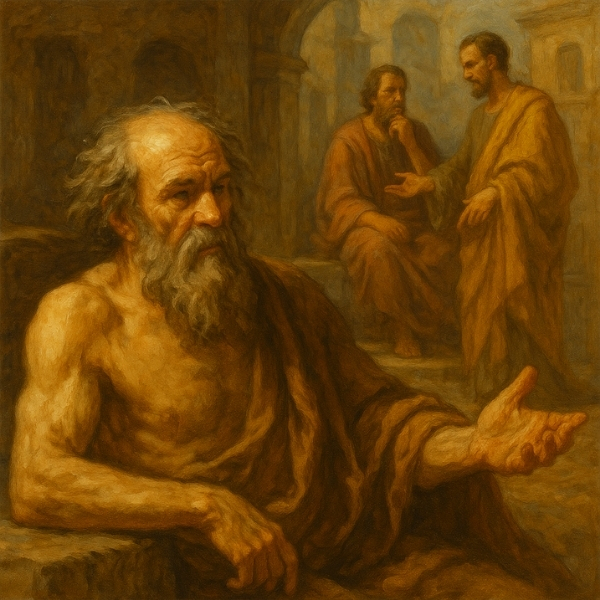
Diogenes believed in living simply, honestly, and without shame. He rejected artificial social constructs and preached through action rather than doctrine. He valued autonomy, courage, and shameless authenticity, even if it meant being mocked, exiled, or misunderstood.
Most Famous For:
Founding the Cynic school of philosophy
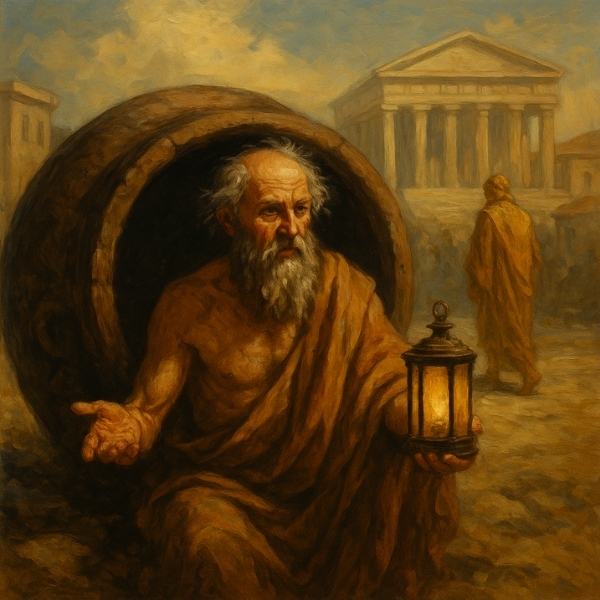
Living in a clay jar in Athens
Publicly criticizing Plato and Alexander the Great
Searching “for an honest man” with a lantern in Broad daylight
“It is not that I am mad, it is only that my head is different from yours.”
 Ethan Townzen