
“Plans are worthless, but planning is everything.”
About
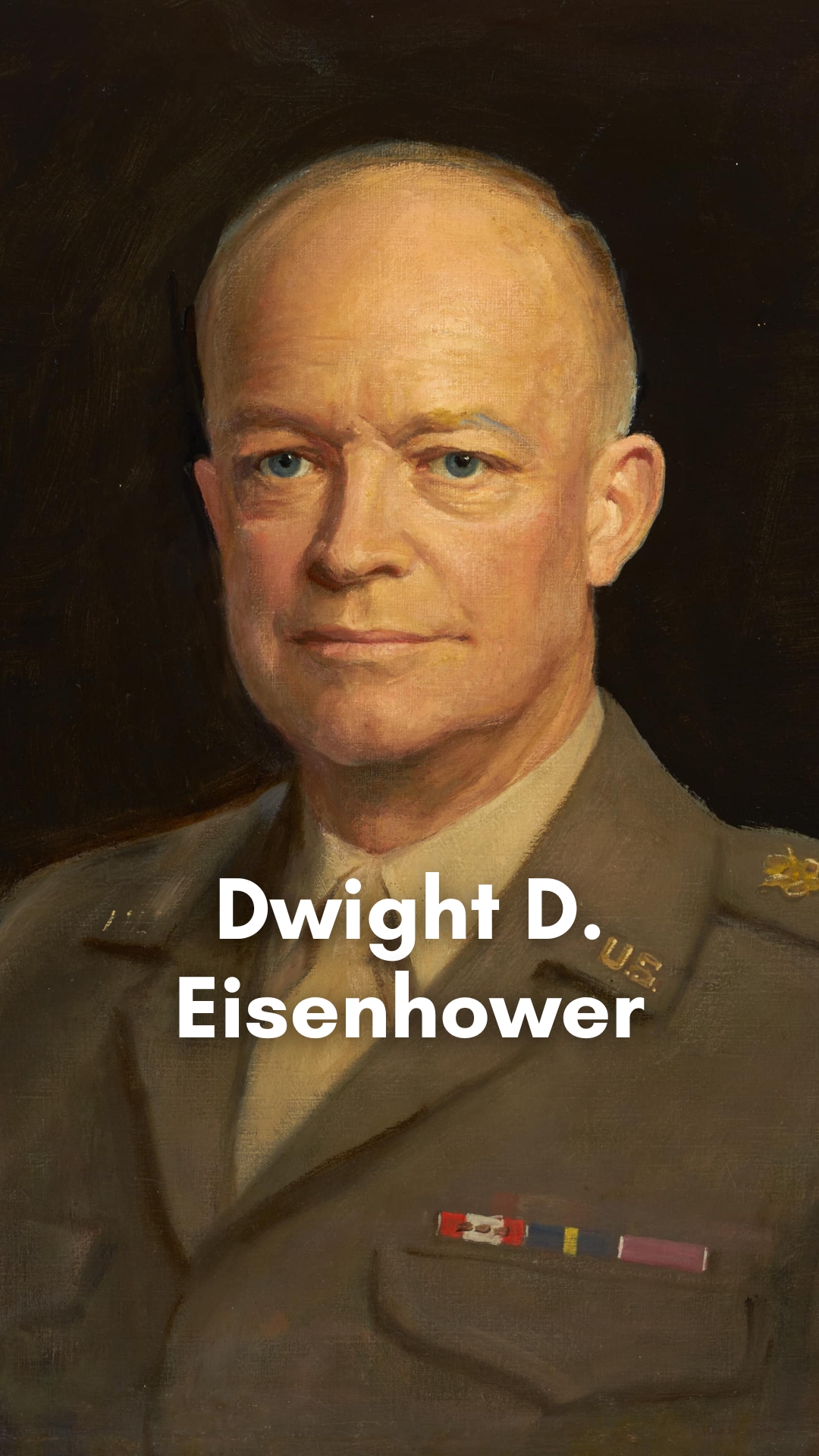
Whether planning the liberation of Europe or guiding a nation through Cold War tension, Eisenhower led with quiet resolve and calculated calm. He didn’t seek glory, he sought results. From the beaches of Normandy to the halls of Washington, he built coalitions, bridged divides, and reminded the world that strength without wisdom is reckless. He believed that planning mattered more than plans, and that lasting victories came not just from force, but from discipline, patience, and unity. Soldier. President. Servant. Ike never raised his voice because his record spoke loud enough.
Place of Birth
Denison, Texas, United States
Birthday
October 14, 1890
Death
March 28, 1969, Washington, D.C., United States
Legacy
Dwight D. Eisenhower was a five-star general and the 34th President of the United States. As Supreme Commander of Allied Forces in Europe during World War II, he led the successful D-Day invasion of Nazi-occupied France. As president (1953–1961), he oversaw a period of postwar prosperity, managed Cold War tensions, created the Interstate Highway System, and warned against the unchecked power of the military-industrial complex. His steady, pragmatic leadership earned him widespread respect as both a soldier and statesman.
Influence
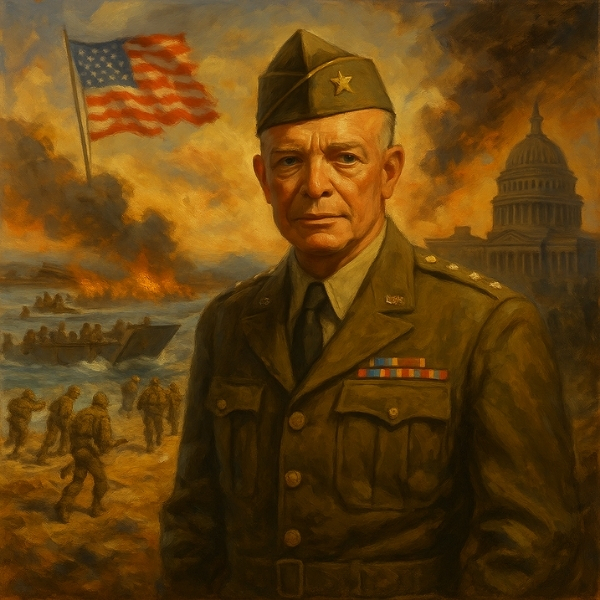
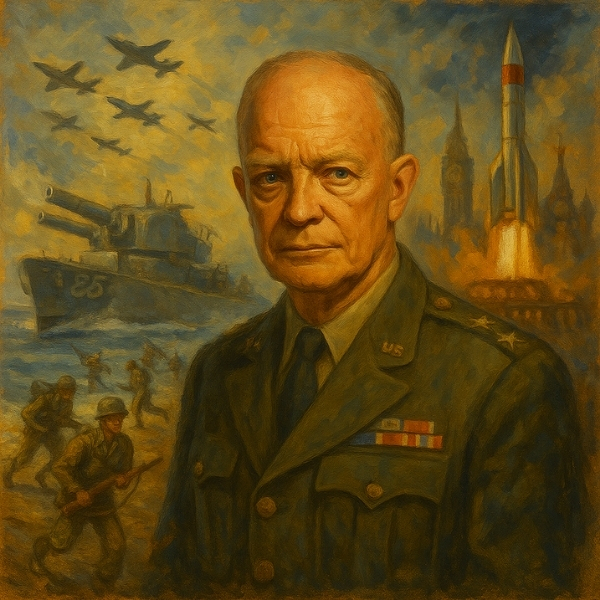
Eisenhower’s military leadership shaped the outcome of WWII, while his presidency helped define the early Cold War era. He strengthened NATO, enforced school desegregation, and championed infrastructure and science education in response to the Soviet space race. His diplomatic balancing act, projecting strength while avoiding direct confrontation and set the tone for decades of U.S. foreign policy.
Values & Beliefs
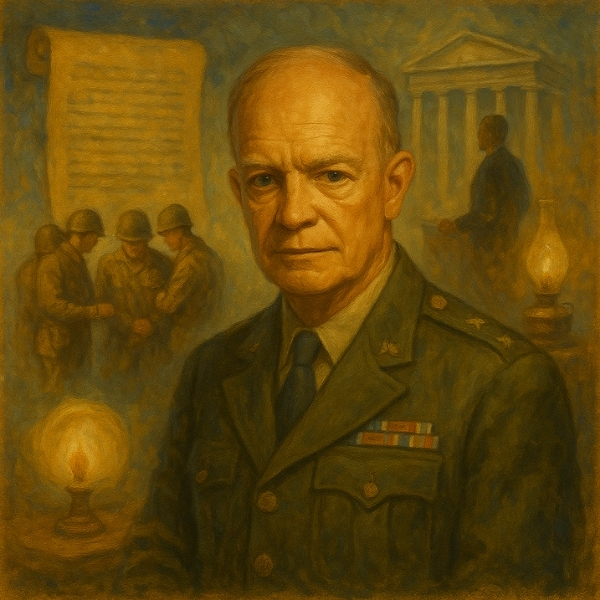
Eisenhower believed in duty, preparation, and moderation. He emphasized teamwork, discipline, and long-term thinking, whether on the battlefield or in the White House. A man of calm authority, he distrusted extremism and prioritized unity, peace through strength, and responsible governance. He viewed leadership not as domination but as service built on humility, foresight, and coalition-building.
Most Famous For:
Serving as Supreme Allied Commander during WWII and leading the D-Day invasion
Becoming the 34th President of the United States (1953–1961)
Establishing the Interstate Highway System
Managing Cold War policies and avoiding escalation with the USSR
“The supreme quality for leadership is unquestionably integrity. Without it, no real success is possible.”
 Ethan Townzen