
“I know I have the body of a weak, feeble woman; but I have the heart and stomach of a king, and of a king of England too.”
About
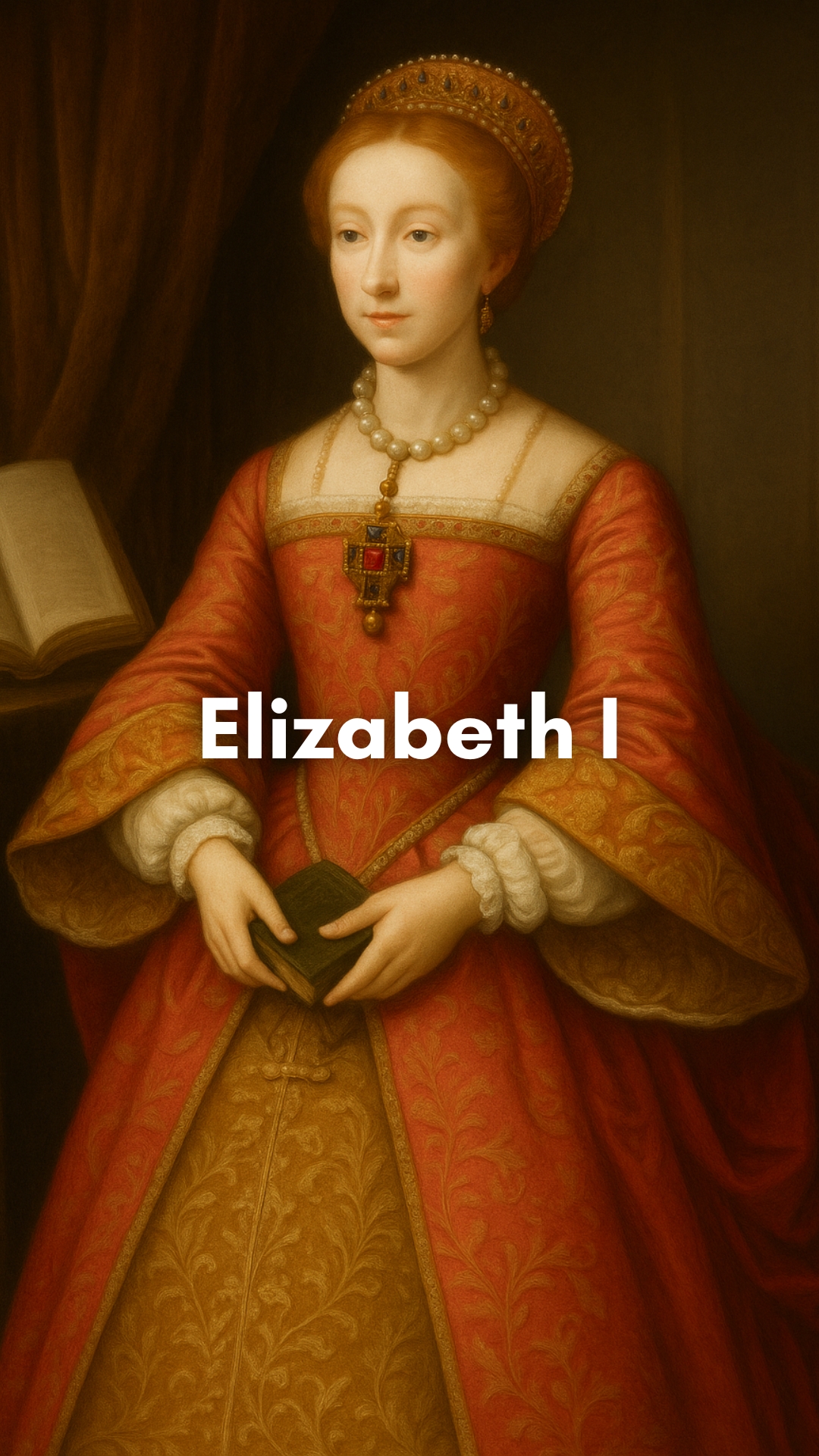
Born under suspicion and crowned against all odds, Elizabeth ruled not by inheritance alone, but by sheer force of will. She faced down invaders, courtiers, and centuries of expectation, all while carrying the weight of a divided kingdom. With wit as sharp as her crown was heavy, she transformed England into a cultural and naval power. She wore no husband’s name, choosing instead to marry her people and in doing so, forged a reign that outshone any consort. In the heart of a woman, she held the fire of a sovereign, proving that greatness answers to no man.
Place of Birth
Greenwich, England
Birthday
September 7, 1533
Death
March 24, 1603 in Richmond Palace, Surrey, England
Legacy
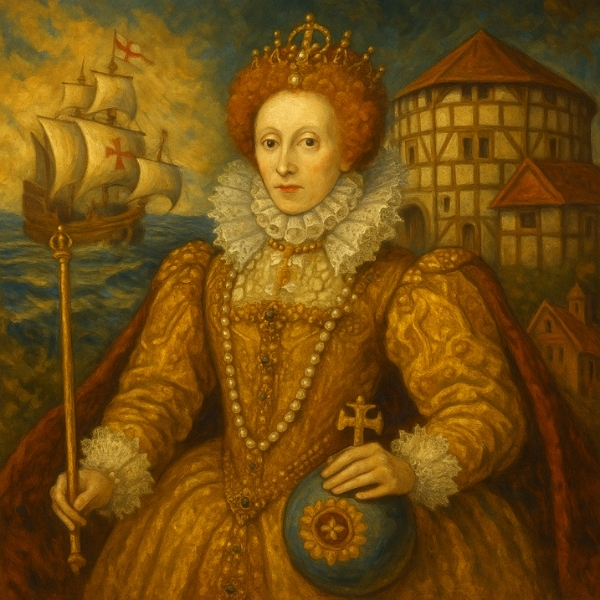
Elizabeth I, the last Tudor monarch, reigned for 45 years and is celebrated as one of the most iconic rulers in history. Her leadership ushered in the Elizabethan Age: a golden era of English exploration, literature, and cultural growth. Known as the “Virgin Queen,” she preserved stability in a fractured kingdom, maintained England’s independence from foreign powers, and oversaw the defeat of the Spanish Armada.
Influence
Elizabeth’s reign shaped the national identity of England and set a precedent for powerful female leadership. Her era gave rise to literary giants like Shakespeare and Marlowe, and explorers such as Sir Francis Drake and Walter Raleigh. She strengthened Protestantism, stabilized the monarchy, and redefined queenship with intellect, diplomacy, and charisma that inspired centuries of female rulers.

Values & Beliefs
Elizabeth valued strength, wisdom, independence, and the unity of her people. Though politically savvy and cautious, she believed deeply in her divine right to rule and worked to balance faith, power, and public image. She refused to marry, choosing her kingdom as her greatest commitment, and governed with a rare combination of grace, wit, and resolve.
Most Famous For:
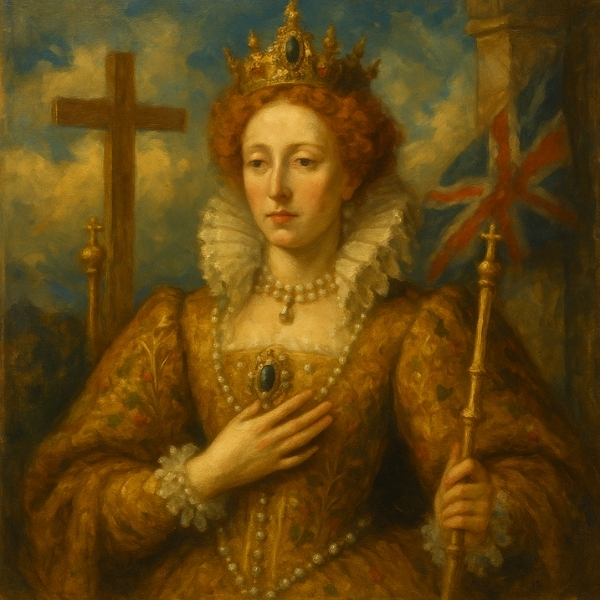
Defeating the Spanish Armada in 1588
Ruling during England’s golden age of culture and exploration
Balancing religious conflict with national unity
Establishing England as a global maritime power
“Though the sex to which I belong is considered weak, you will nevertheless find me a rock that bends to no wind.”
 Ethan Townzen