
“Right action is better than knowledge; but in order to do what is right, we must know what is right.”
About
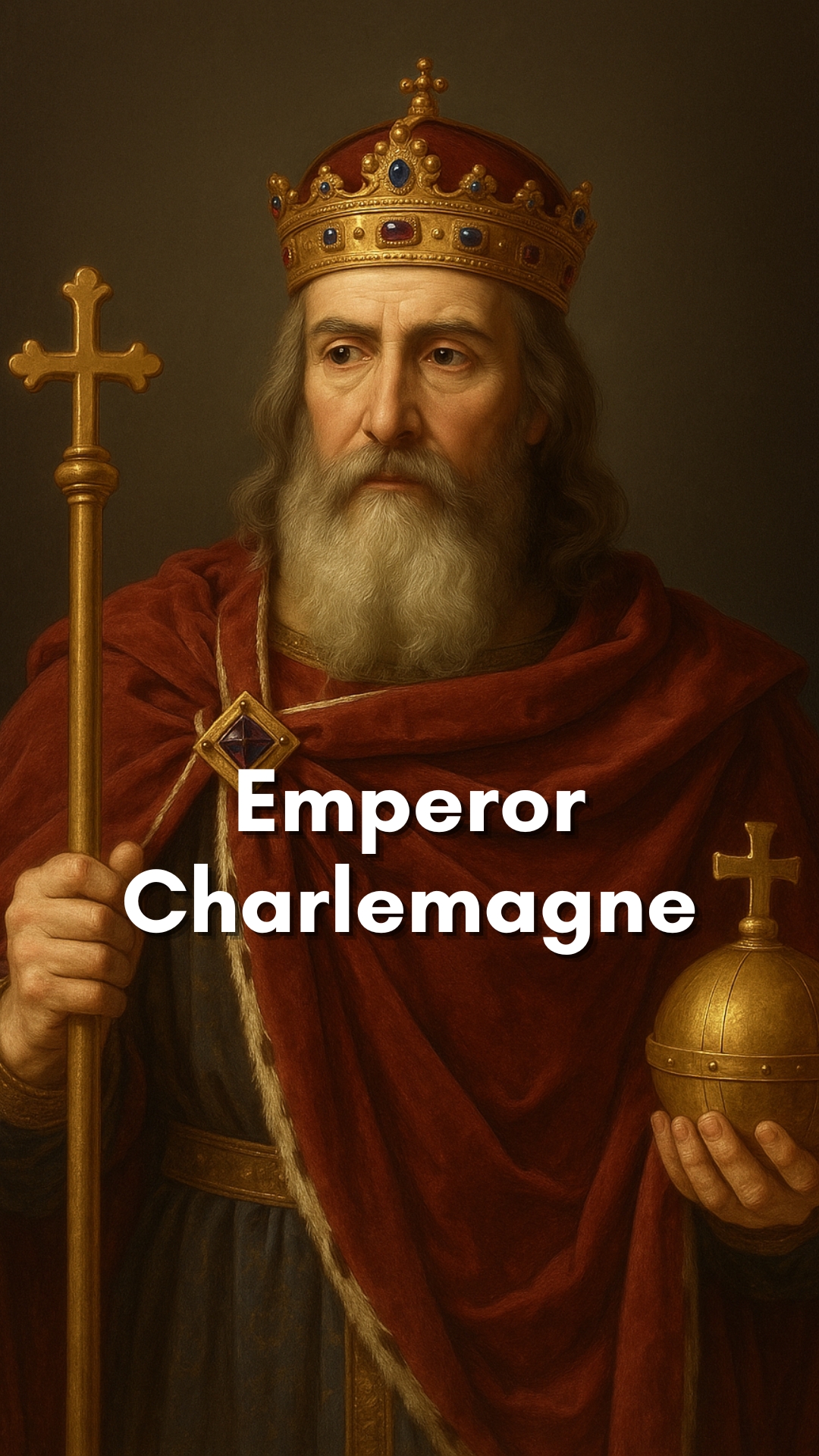
Sword in one hand, scripture in the other, Charlemagne carved a new empire from the ashes of Rome. He was not merely a conqueror, but a cultivator of faith, law, and learning. Crowned by the Pope as the first Holy Roman Emperor, he stood at the crossroads of ancient legacy and medieval awakening. Under his reign, schools reopened, scribes copied wisdom, and unity returned to a fractured land. Charlemagne believed civilization demanded both strength and spirit, that to rule justly, one must first seek to understand. His empire faded, but his vision shaped the soul of Europe.
Place of Birth
Herstal or Aachen, Frankish Kingdom (modern-day Belgium or Germany)
Birthday
April 2, 747 CE
Death
January 28, 814 CE in Aachen, Carolingian Empire
Legacy
Charlemagne, or Charles the Great, was the King of the Franks and Lombards who became the first Holy Roman Emperor in 800 CE. He united much of Western and Central Europe for the first time since the Roman Empire, laying the foundation for modern France and Germany. His reign sparked the Carolingian Renaissance, a revival of learning, culture, and religious reform, and his vision for a Christian empire reshaped European identity for centuries.
Influence
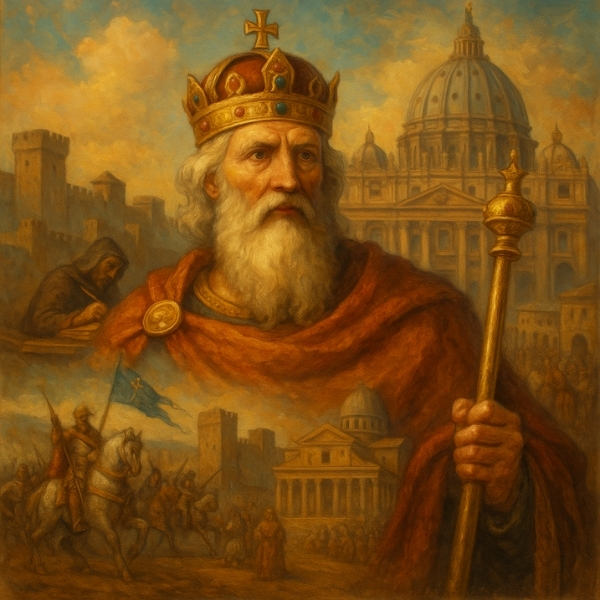
Charlemagne’s influence was monumental in both politics and culture. He helped standardize currency, laws, and education, influencing the structure of medieval European monarchies. His empire served as a model for later European rulers, including Otto I and Napoleon. Through the Church, his legacy endured in both spiritual and secular governance, as the Holy Roman Empire continued his vision of a unified Christian West.

Values & Beliefs
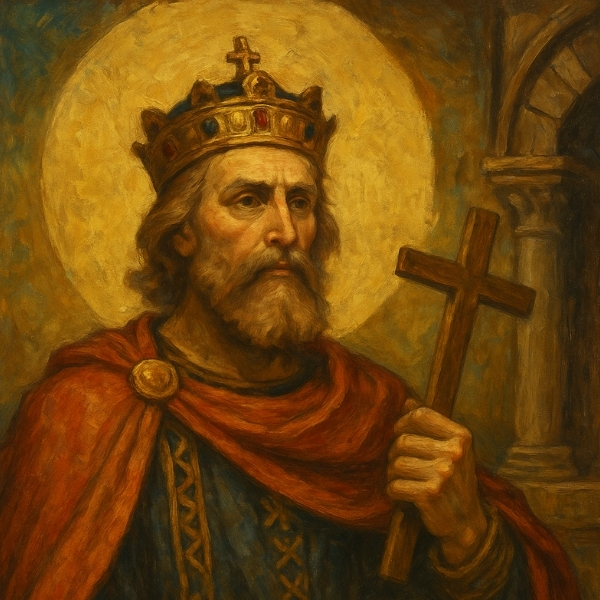
Charlemagne believed in divine kingship, education, unity, and the Christian faith as cornerstones of civilization. Though a warrior-king, he prioritized literacy, religious reform, and legal order. He worked closely with the Church but also emphasized his own authority, setting the stage for the medieval balance between crown and altar. His reign blended ambition with devotion, conquest with culture.
Most Famous For:
Founding the Carolingian Empire and being crowned the first Holy Roman Emperor
Reviving learning and culture during the Carolingian Renaissance
Unifying large parts of Western Europe after the fall of Rome
Spreading Christianity and strengthening the alliance between Church and State
“To have another language is to possess a second soul.”
 Ethan Townzen