
“There is nothing noble in being superior to your fellow man; true nobility is being superior to your former self.

About
He wrote like he lived, no frills, no excuses, just truth carved down to the bone. Ernest Hemingway hunted meaning in war zones, on fishing boats, and through whiskey-laced silence, always chasing the line between strength and suffering. With every story, he taught that nobility isn’t in the spotlight, but in the quiet fight to become better than you were. His heroes bled quietly, endured endlessly, and spoke little, because in Hemingway’s world, grace was found not in words, but in the will to carry on.
Place of Birth
Oak Park, Illinois, United States
Birthday
July 21, 1899
Death
July 2, 1961 in Ketchum, Idaho, United States
Legacy
Ernest Hemingway was an American novelist, short story writer, and journalist whose distinctive writing style, marked by brevity, understatement, and emotional depth, redefined 20th-century literature. A Nobel and Pulitzer Prize winner, Hemingway’s work continues to resonate with readers for its raw honesty, stoic heroes, and exploration of courage, war, and human endurance.

Influence
Hemingway influenced generations of writers through his “iceberg theory” of prose, which emphasized subtext and minimalism. His adventurous life and fearless engagement with topics like war, love, and loss made him an icon of literary masculinity. Writers from Raymond Carver to Joan Didion and even filmmakers have drawn from his taut style and thematic power.
Values & Beliefs
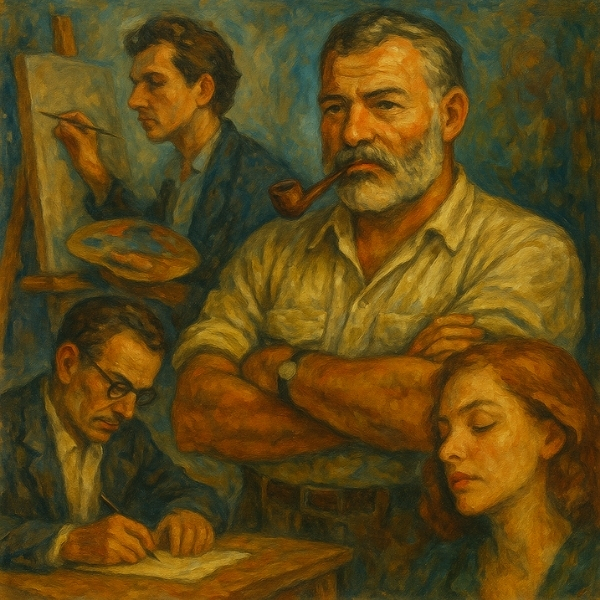
Hemingway valued courage, authenticity, and living with intensity. He believed in confronting fear head-on, whether in battle, bullfighting, or personal struggles. His worldview was shaped by war, loss, and nature, and he often sought meaning through action and experience. He distrusted pretense, favoring honesty, discipline, and emotional restraint as virtues of the self-made individual.
Most Famous For:
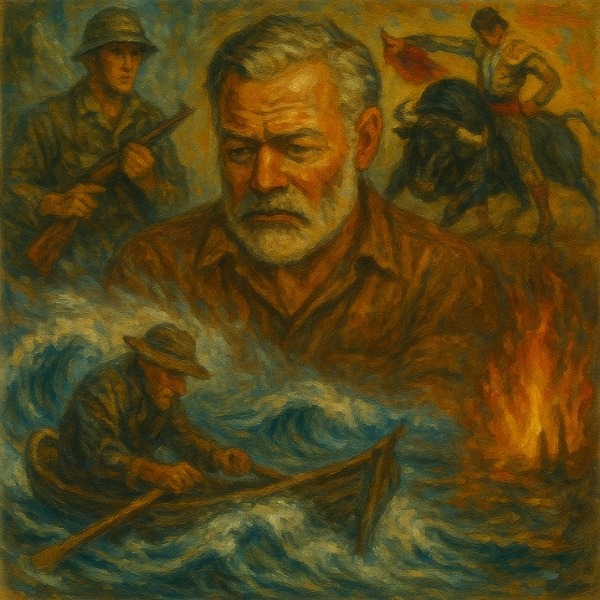
Writing The Old Man and the Sea, A Farewell to Arms, and The Sun Also Rises
Developing the minimalist “iceberg theory” of writing
Capturing themes of war, masculinity, loss, and resilience
Becoming a cultural figure known as much for his lifestyle as for his literature
“The world breaks everyone, and afterward, many are strong at the broken places.”
 Ethan Townzen