
“The only thing we have to fear is fear itself.”

About
When the nation stood on the edge of despair, FDR met it with calm, courage, and an unshakable voice. Stricken by polio but never by fear, he rose to lead a broken economy and a world at war, not with rage, but with resolve. His New Deal lifted millions, his words steadied hearts, and his vision redefined what leadership could be: bold, compassionate, and enduring. Roosevelt taught that hardship could be met with hope and that even in our darkest hours, unity and action can light the way forward.
Place of Birth
Hyde Park, New York, United States
Birthday
January 30, 1882
Death
April 12, 1945, Warm Springs, Georgia, United States
Legacy
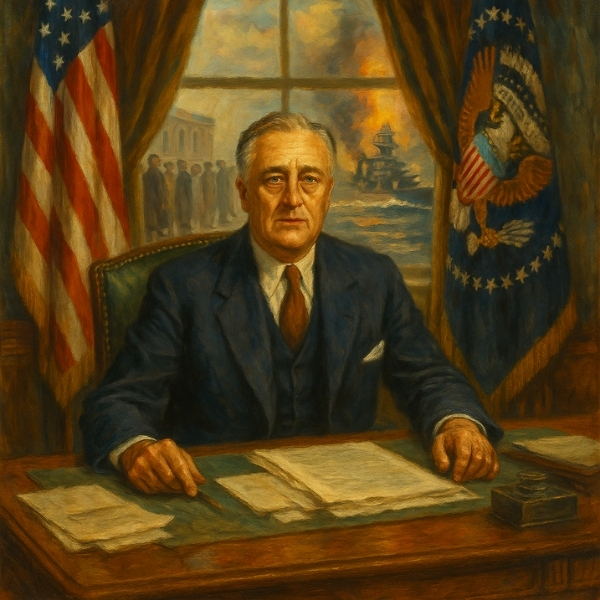
Franklin D. Roosevelt, often called FDR, was the 32nd President of the United States and the only one elected to four terms. He led the country through two of the greatest crises in modern American history: the Great Depression and World War II. Through bold and sweeping reforms, he transformed the role of the federal government in American life and reshaped global politics. His New Deal programs redefined the social contract, while his leadership during WWII helped preserve democracy on a global scale.
Influence
FDR’s influence on American governance and global diplomacy was profound. Domestically, his New Deal policies laid the foundation for modern social safety nets, including Social Security and labor protections. Internationally, he was a key architect of the Allied strategy in World War II and helped found the United Nations. His fireside chats brought calm and clarity to millions during uncertain times, and his presidency set a new precedent for executive power and crisis leadership.

Values & Beliefs
Roosevelt believed in resilience, optimism, and the power of collective action. A champion of the “forgotten man,” he saw government not as a distant force but as a tool for social justice, economic opportunity, and public good. Despite being paralyzed from polio, he projected strength, confidence, and empathy. He valued democracy, cooperation, and reform, always urging Americans to face adversity with courage and unity.

Most Famous For:
Leading the U.S. through the Great Depression and World War II
Creating the New Deal and expanding federal government responsibility
Establishing Social Security and labor protections
Serving four presidential terms (1933–1945)
“The only thing that will redeem mankind is cooperation.”
 Ethan Townzen