
“If there is no struggle, there is no progress.”
About
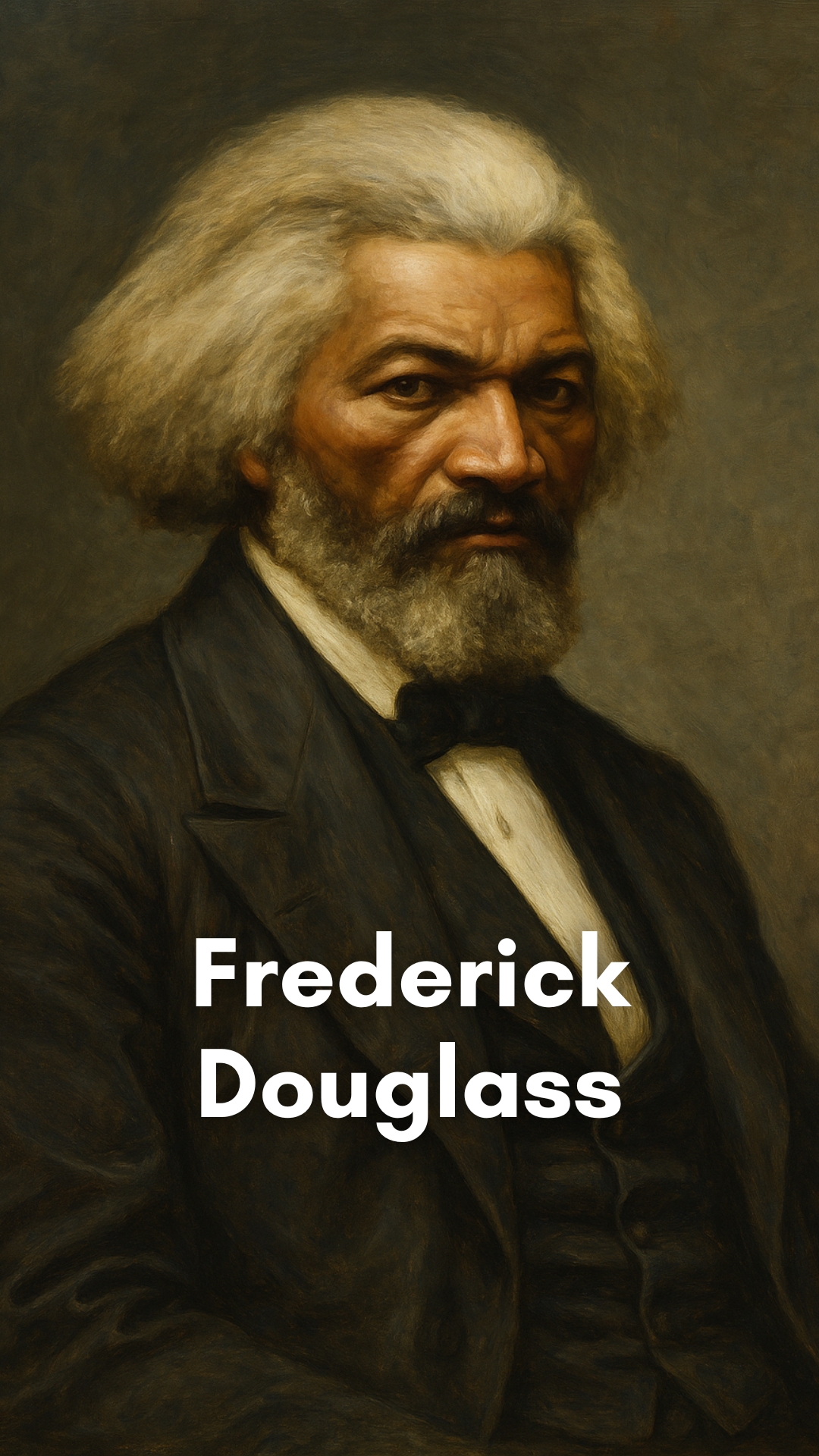
Born in bondage, he taught himself to read, and with every word, he rewrote his destiny. Frederick Douglass escaped slavery not only with his body, but with his voice, turning pain into purpose and injustice into thunder. He spoke in halls, across oceans, and into history demanding a world where freedom meant all, or it meant nothing. With steady fire and unmatched eloquence, he challenged presidents, awakened conscience, and proved that no chain could hold a soul determined to rise. His struggle was lifelong. His progress, eternal.
Place of Birth
Talbot County, Maryland, USA
Birthday
February 14, 1818
Death
February 20, 1895 (Washington, D.C., U.S.)
Legacy
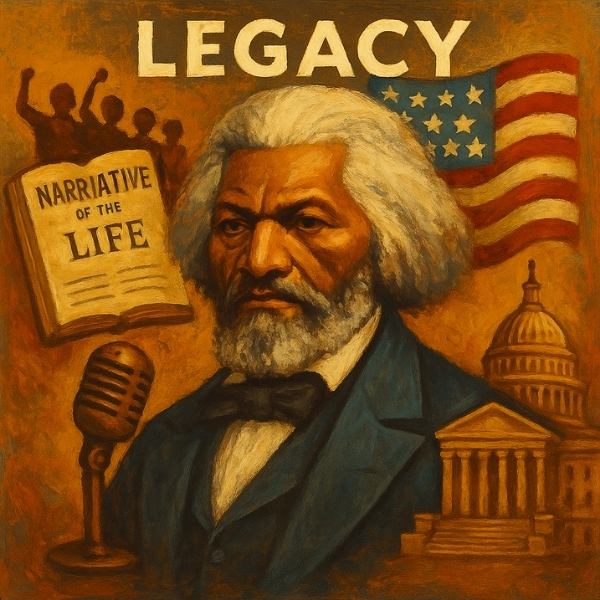
Douglass’s legacy is monumental. His autobiography, Narrative of the Life of Frederick Douglass, an American Slave, became a cornerstone of anti-slavery literature and shaped public opinion both in the U.S. and abroad. He advised presidents, spoke internationally, and broke racial barriers in politics and publishing. Today, he stands as a symbol of courage, dignity, and the enduring fight for justice and freedom.
Influence
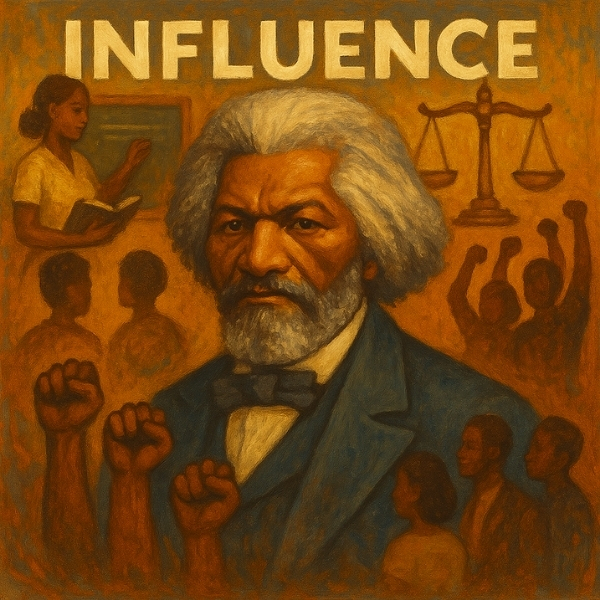
Frederick Douglass influenced generations of activists, reformers, and leaders in civil rights, human rights, and education. His insistence on the moral and intellectual capacity of Black people challenged deep-seated prejudice and helped pave the way for the 13th, 14th, and 15th Amendments. His speeches and writings continue to inspire movements for equality, justice, and empowerment around the world.
Values & Beliefs
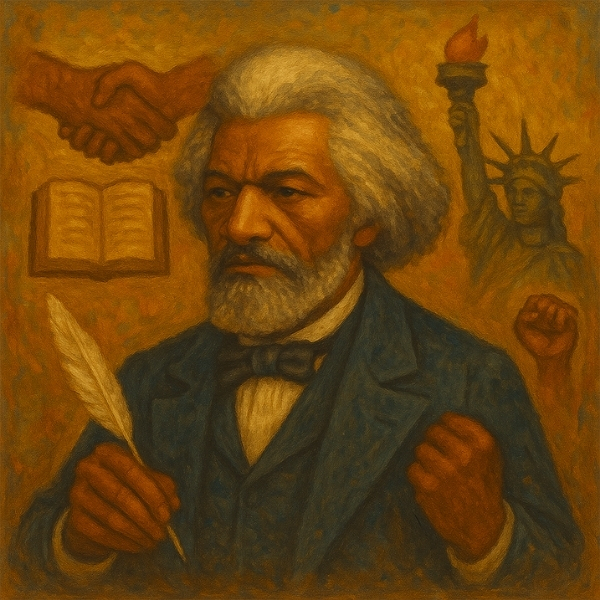
Douglass believed in education as the path to freedom and self-liberation. He championed truth, self-reliance, resilience, and the moral power of nonviolent resistance. He stood for universal human dignity, equality under the law, and the right of every individual to rise beyond their circumstances. A fierce advocate for both racial and gender justice, Douglass believed that progress required both personal responsibility and collective action.
Most Famous For:
Writing the Narrative of the Life of Frederick Douglass, one of the most important autobiographies in American history
Becoming a leading voice of the abolitionist movement in the 19th century
Advising Abraham Lincoln and other presidents on civil rights
Advocating for women’s suffrage and attending the Seneca Falls Convention
Publishing and editing influential anti-slavery newspapers, including The North Star
“It is easier to build strong children than to repair broken men.”
 Ethan Townzen