
“The greatest and noblest pleasure which men can have in this world is to discover new truths; and the next is to shake off old prejudices.”
About
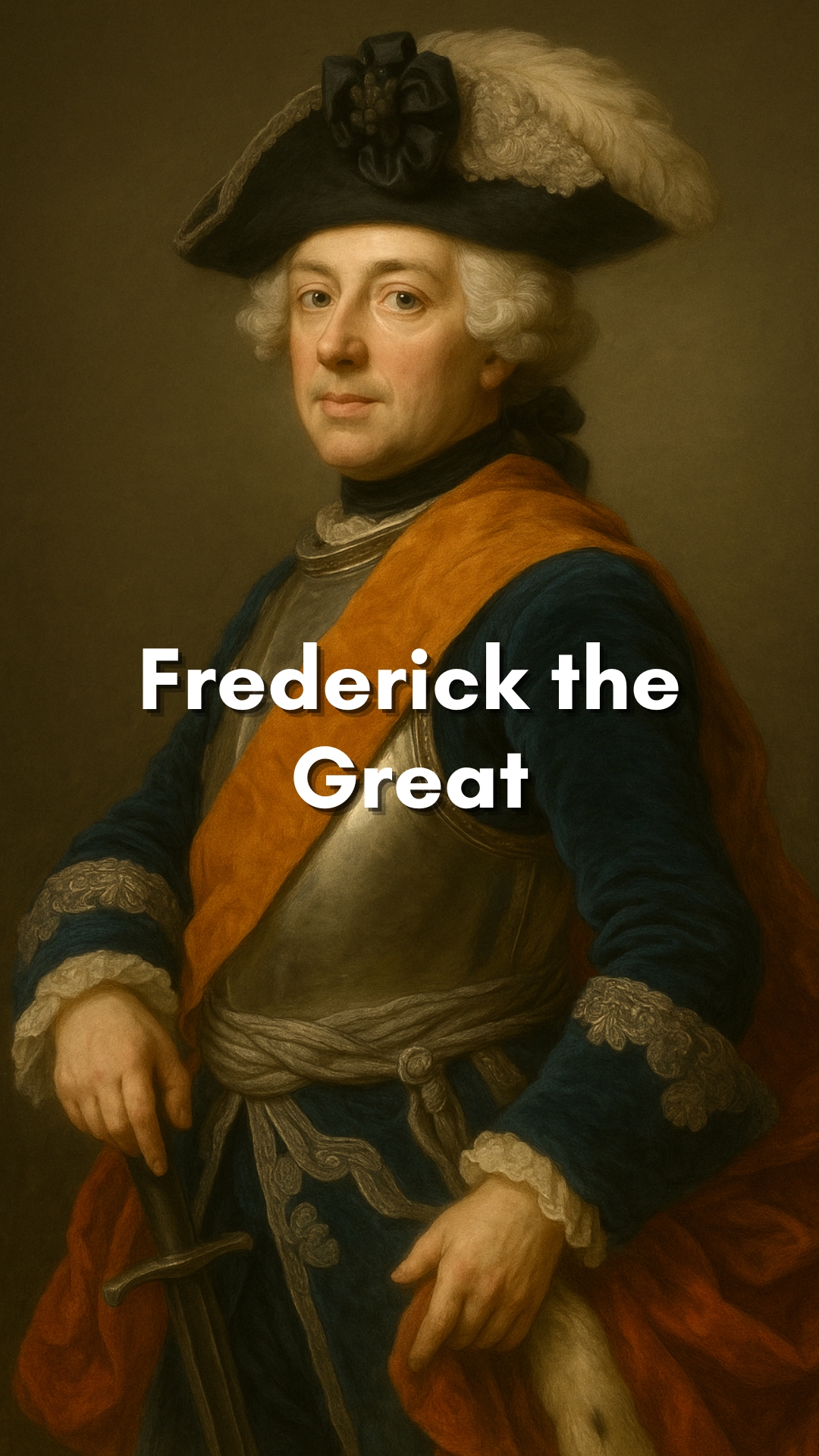
He wore the crown lightly but bore its weight with precision. Frederick the Great ruled not only with the sword, but with the mind of an Enlightenment thinker in a general’s uniform. He waged war with brilliance, reformed law with reason, and filled his court with music and philosophy. To him, kingship was service, not splendor; duty, not divinity. In a world of conquest and ceremony, he stood apart, skeptical, sharp, and strangely modern. Frederick proved that true power isn’t just taken on the battlefield, it’s earned in the pages of thought and the quiet calculus of rule.
Place of Birth
Berlin, Kingdom of Prussia
Birthday
January 24, 1712
Death
August 17, 1786 in Potsdam, Kingdom of Prussia
Legacy
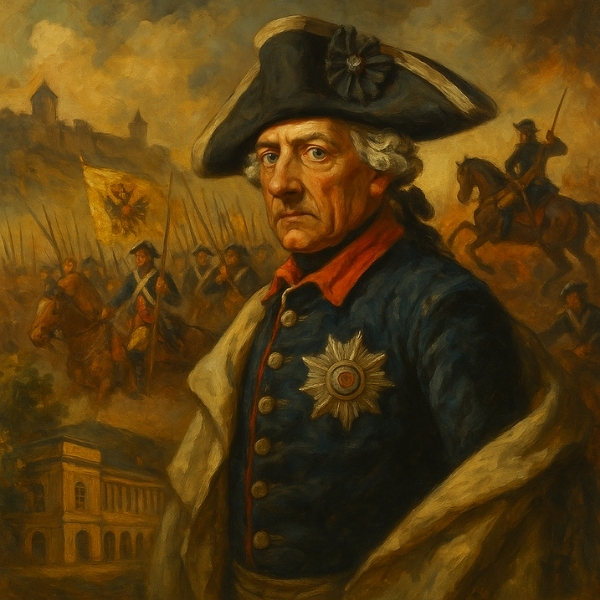
Frederick the Great, also known as Frederick II, was King of Prussia from 1740 to 1786 and is regarded as one of the most influential monarchs in European history. Under his rule, Prussia expanded its territory, modernized its army, and became a formidable European power. His reign marked the peak of the Enlightened Absolutism era, blending military strength with philosophical governance and cultural advancement.
Influence
Frederick reshaped the political and military landscape of 18th-century Europe. A brilliant tactician, he revolutionized battlefield strategy and became a model for later leaders like Napoleon. He also corresponded with Voltaire, patronized the arts, and championed legal reform. His fusion of authoritarian rule with Enlightenment ideals laid a foundation for modern statecraft and civil governance.
Values & Beliefs
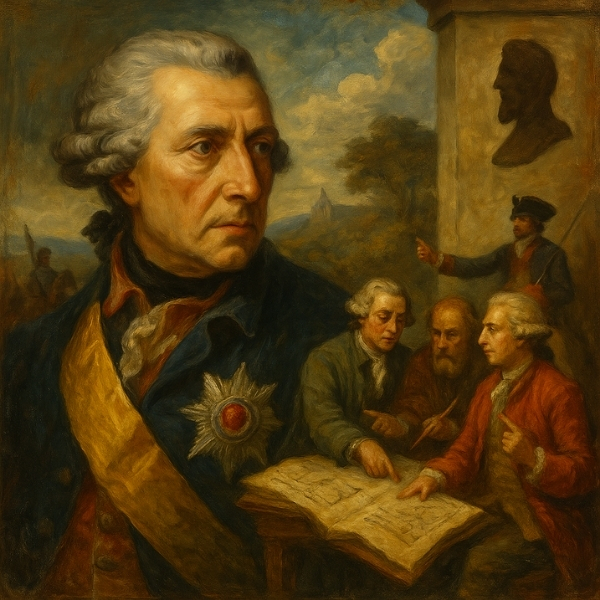
Frederick valued discipline, intellect, justice, and efficiency. Though an absolute monarch, he embraced Enlightenment thinking, promoting religious tolerance, rational laws, and merit-based bureaucracy. He believed a king’s duty was to serve his people, and that culture and education were vital to national strength. His views often contrasted with his ruthless military realism, revealing a ruler of deep contradictions and enduring vision.
Most Famous For:
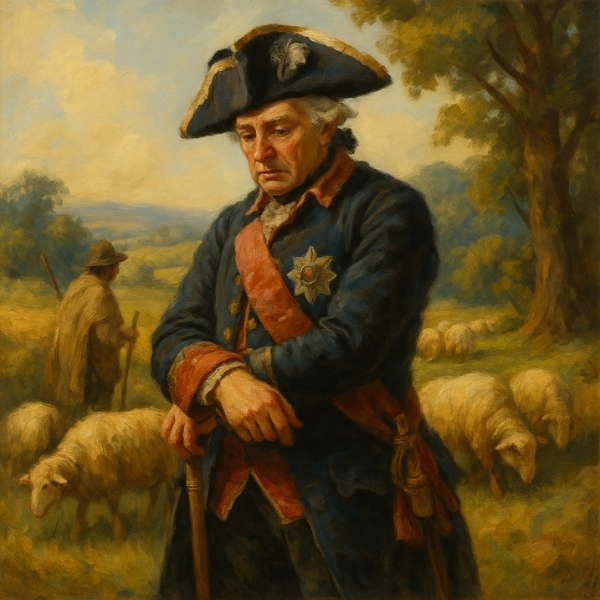
Transforming Prussia into a European military and cultural powerhouse
Leading decisive campaigns in the War of Austrian Succession and Seven Years’ War
Modernizing civil administration and legal systems
Championing Enlightenment ideals while ruling as an absolute monarch
“A crown is merely a hat that lets the rain in.”
 Ethan Townzen