
“The mystery of human existence lies not in just staying alive, but in finding something to live for.”

About
He wrote not to entertain, but to unearth the soul. Dostoevsky delved into the abyss of guilt, freedom, and faith, not as abstractions, but as daily battles within the human heart. A prisoner, a gambler, a believer torn by doubt, he knew suffering firsthand and transformed it into sacred insight. His characters stagger under the weight of conscience, cry out for redemption, and search for meaning in a fractured world. In his pages, light and darkness are never far apart because he knew salvation is not found in perfection, but in the struggle to choose love anyway.
Place of Birth
Moscow, Russia
Birthday
November 11, 1821
Death
February 9, 1881 in Saint Petersburg, Russia
Legacy
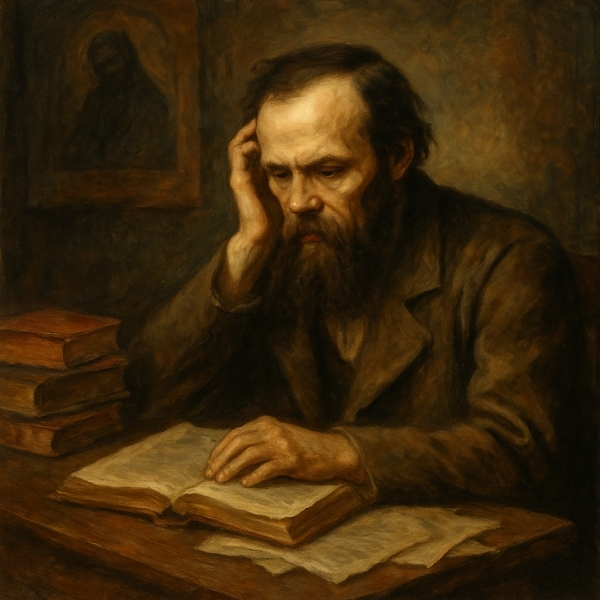
Fyodor Dostoevsky was a Russian novelist, philosopher, and journalist whose literary works explore the depths of human psychology, morality, suffering, and free will. Known for novels like Crime and Punishment, The Brothers Karamazov, and Notes from Underground, his writing profoundly shaped modern existentialism, psychological fiction, and moral philosophy.
Influence
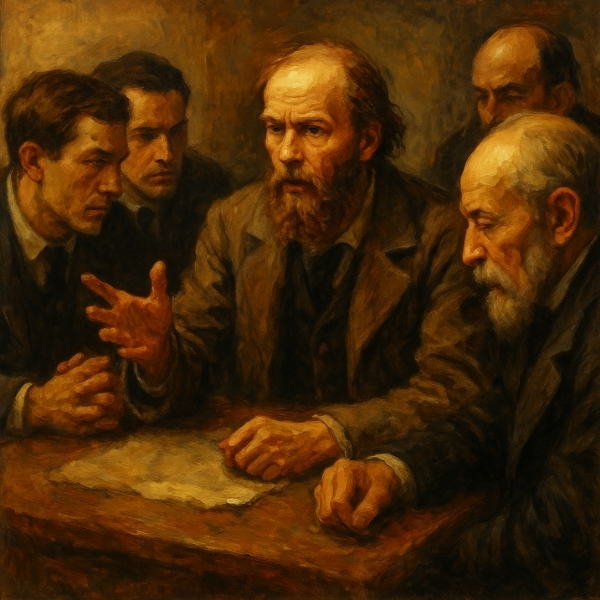
Dostoevsky’s exploration of conscience, inner conflict, and spiritual struggle has influenced countless writers and thinkers, including Nietzsche, Jung, Freud, Camus, Kafka, and Solzhenitsyn. His work bridged literature and philosophy, foreshadowing many of the existentialist themes that would define the 20th century. His characters wrestle with guilt, redemption, and the tension between belief and nihilism.
Values & Beliefs
Dostoevsky believed in the redemptive power of suffering, the sacredness of free will, and the necessity of spiritual and moral reflection. Though tormented by his own questions about faith, he ultimately leaned toward Christian existentialism, viewing love, humility, and compassion as essential to the human experience. He emphasized the battle between good and evil within each individual.

Most Famous For:
Writing Crime and Punishment, The Idiot, Demons, and The Brothers Karamazov
Exploring moral philosophy, free will, and the human psyche
Foreshadowing existentialist and psychological literature
Creating complex characters tormented by ethical and spiritual dilemmas
“To live without hope is to cease to live.”
 Ethan Townzen