
“Liberty, when it begins to take root, is a plant of rapid growth.”
About
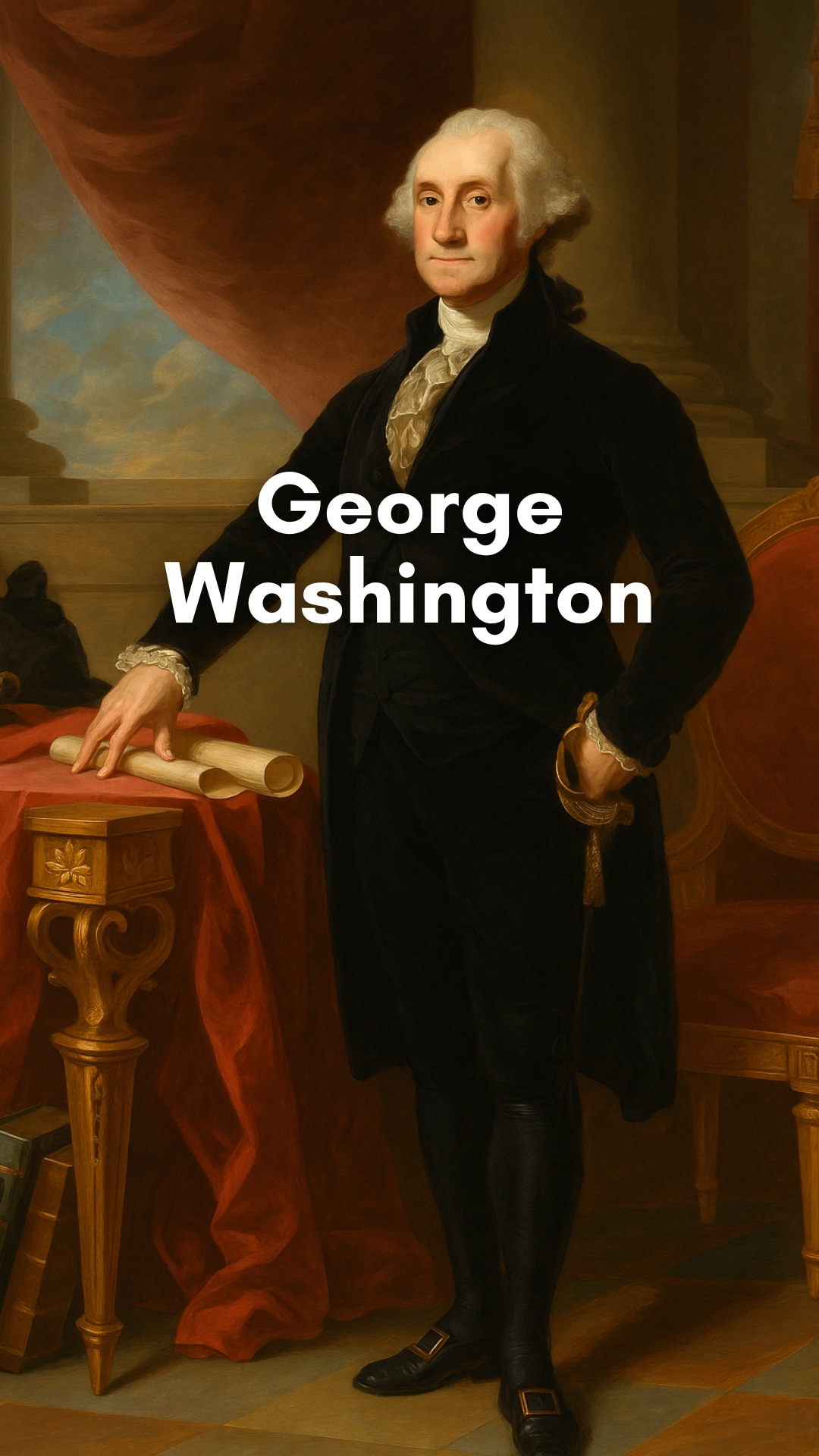
George Washington was the reluctant revolutionary, a man who led not for power but for principle. As commander of the Continental Army, he held together a fragile cause through discipline, endurance, and unshakable resolve. In the brutal winter of 1776, he crossed the icy Delaware River on Christmas night to launch a surprise attack at Trenton, a daring move that turned the tide of the war and embodied his will to win against all odds. As the first President of the United States, he set the tone for a republic, stepping away from power when he could have seized it… a decision that defined his character as much as any battlefield victory. Washington believed in duty over ambition, unity over division, and the weight of example. Through war, governance, and restraint, he helped shape the identity of a nation and proved that the greatest leaders are those who lead by values, not ego.
Place of Birth
Westmoreland County, Virginia, British America
Birthday
February 22, 1732
Death
December 14, 1799 in Mount Vernon, Virginia, United States
Legacy
George Washington, known as the “Father of His Country,” was the first President of the United States and the commander of the Continental Army during the American Revolution. He led the fledgling nation to independence and helped shape the foundational principles of the republic. Washington’s commitment to civic virtue, restraint in power, and leadership during uncertain times laid the groundwork for American democracy.
Influence
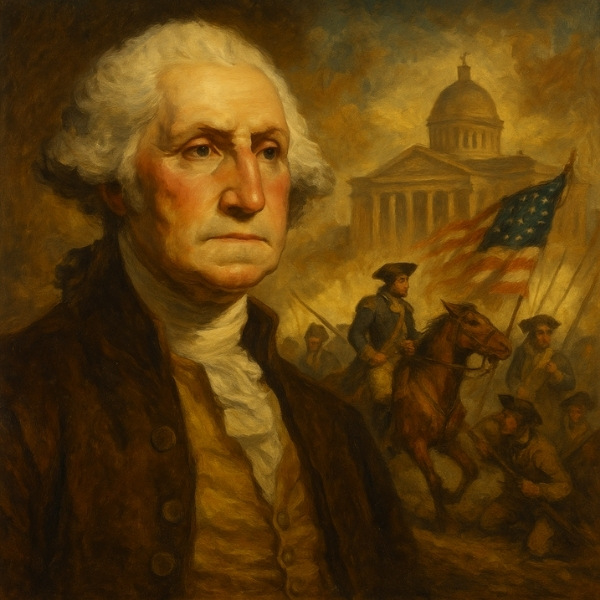
Washington’s influence reverberated across nations and generations. He set vital precedents for democratic governance, including the peaceful transfer of power and the two-term presidential limit. Internationally admired for his character and judgment, he inspired revolutionary movements worldwide and became a global symbol of republican leadership and principled resistance to tyranny.
Values & Beliefs
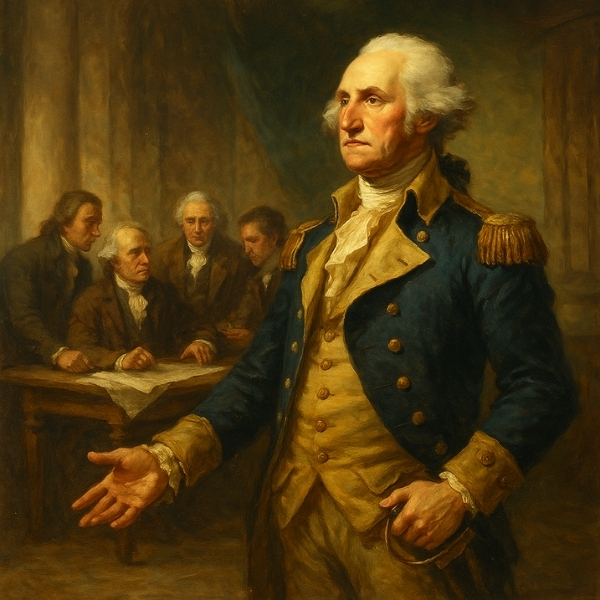
Washington believed in liberty, duty, modesty, and national unity. Though not a philosopher by trade, his actions embodied Enlightenment ideals. He valued reasoned governance, individual rights, and moral leadership. Reluctant to rule as a monarch, he refused titles of nobility and placed country above personal ambition, choosing service over power and guiding a fragile nation through birth and stability.

Most Famous For:
Leading the Continental Army to victory in the American Revolution
Becoming the first President of the United States (1789–1797)
Presiding over the Constitutional Convention in 1787
Establishing foundational presidential norms and peaceful transitions of power
“Observe good faith and justice toward all nations. Cultivate peace and harmony with all.”
 Ethan Townzen