
“Go confidently in the direction of your dreams. Live the life you have imagined.”
About
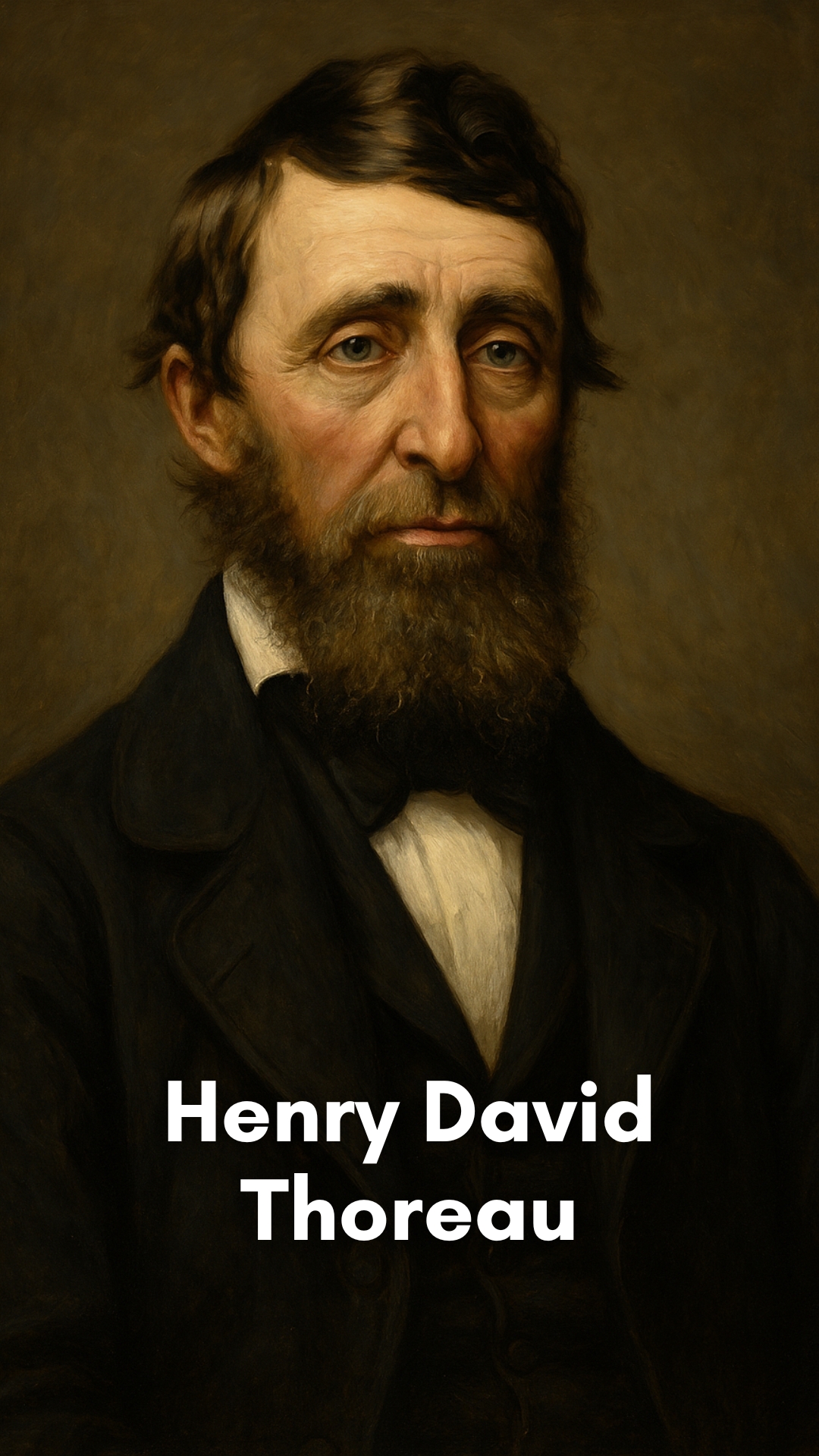
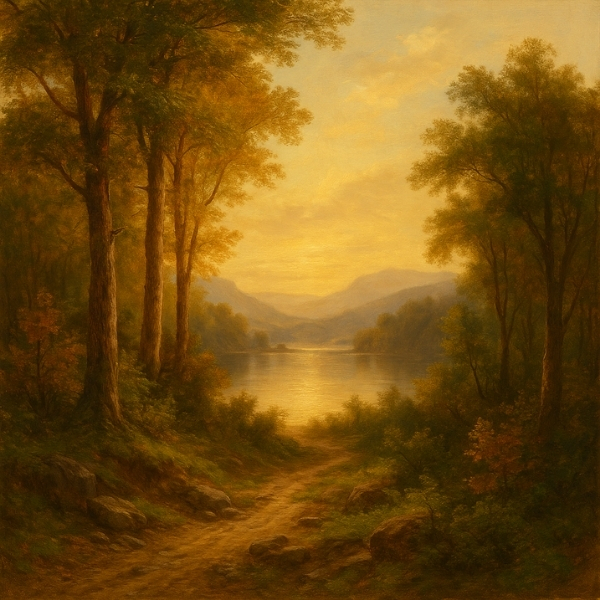
He stepped away from society not to escape it, but to understand it. In the quiet woods by Walden Pond, Thoreau listened to birdsong, to conscience, to the deeper rhythms of a deliberate life. He believed freedom was not found in noise or wealth, but in stillness, simplicity, and standing for what is right. With pen and principle, he taught that one person, rooted in truth, could challenge empires. His cabin was small, but his influence vast reaching across generations, across oceans, wherever souls dare to live with purpose.
Place of Birth
Concord, Massachusetts, USA
Birthday
July 12, 1817
Death
May 6, 1862 in Concord, Massachusetts
Legacy
Henry David Thoreau was an American philosopher, writer, and naturalist best known for his book Walden and his essay Civil Disobedience. A central figure in the Transcendentalist movement, he advocated for simple living, self-reliance, and a deeper connection with nature. His writings continue to inspire movements focused on civil rights, environmentalism, and personal freedom.

Influence
Thoreau’s philosophy deeply impacted global leaders such as Mahatma Gandhi and Martin Luther King Jr., who drew on his ideas about nonviolent resistance. He also helped shape the modern environmental movement and the literary tradition of American nature writing. His call for authenticity and moral courage remains relevant today.
Values & Beliefs
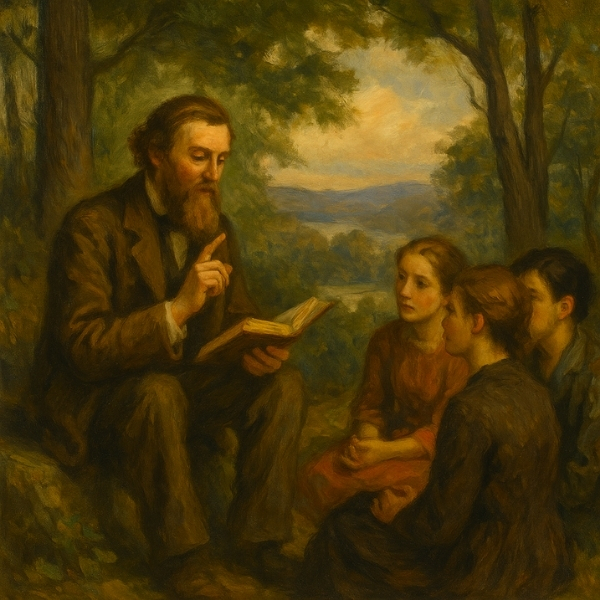
Thoreau believed in individual conscience over societal norms, the importance of living simply, and finding truth through solitude and nature. He emphasized civil disobedience against unjust laws, the pursuit of personal freedom, and the spiritual value of the natural world. For him, life was meant to be lived deliberately and meaningfully.
Most Famous For:
Writing Walden and Civil Disobedience
Advocating for nonviolent resistance to injustice
Shaping environmentalism and American individualism
“Rather than love, than money, than fame, give me truth.”
 Ethan Townzen