
“There is a time for many words, and there is also a time for sleep.”

About
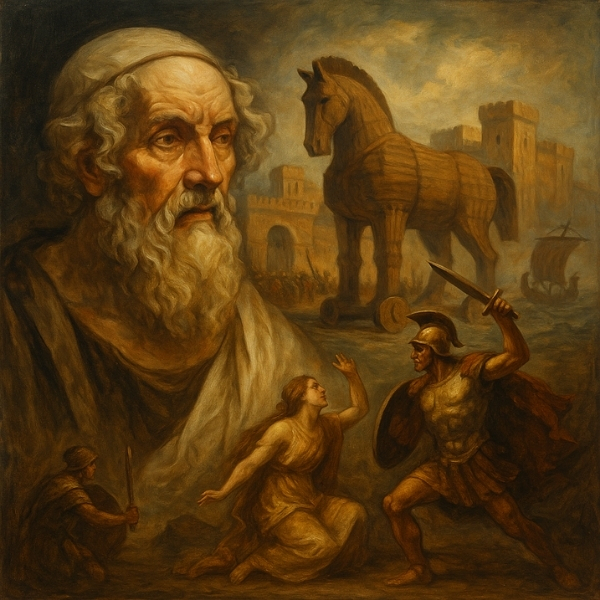
He spoke before history had a pen and his words never faded. With only verse and vision, Homer summoned gods, heroes, and the fury of fate into stories that shaped a world. The Iliad thundered with honor and wrath; The Odyssey wandered with wisdom and longing. In every line, he gave voice to what it means to strive, to suffer, to return home changed. Though his life is cloaked in mystery, his legacy is clear: a storyteller who sang humanity into memory where glory is fleeting, but story endures.
Place of Birth
Ionia, Greece
Birthday
750 BCE
Death
700 BCE in Ios, Greece
Legacy
Homer is credited as the author of The Iliad and The Odyssey, two of the oldest and most influential epic poems in Western literature. His works helped define the heroic code, introduced rich mythological storytelling, and influenced the structure of poetry and narrative for centuries.
Influence
Homer’s epics shaped Greek identity and values, inspired philosophers like Plato and Aristotle, and set the foundation for Western storytelling. His influence extends into modern literature, philosophy, film, and even military strategy, as his characters embody ideals of courage, honor, and fate.

Values & Beliefs
Though little is known of Homer’s personal beliefs, his works reflect deep reverence for fate (moira), honor, hospitality (xenia), and the gods. His stories explore human nature, the cost of pride, and the search for glory, suggesting a worldview shaped by both reverence and realism.

Most Famous For:
“There is nothing more noble or admirable than when two people who see eye to eye keep house as man and wife, confounding their enemies and delighting their friends.”
 Ethan Townzen