
“Science is organized knowledge. Wisdom is organized life.”
About
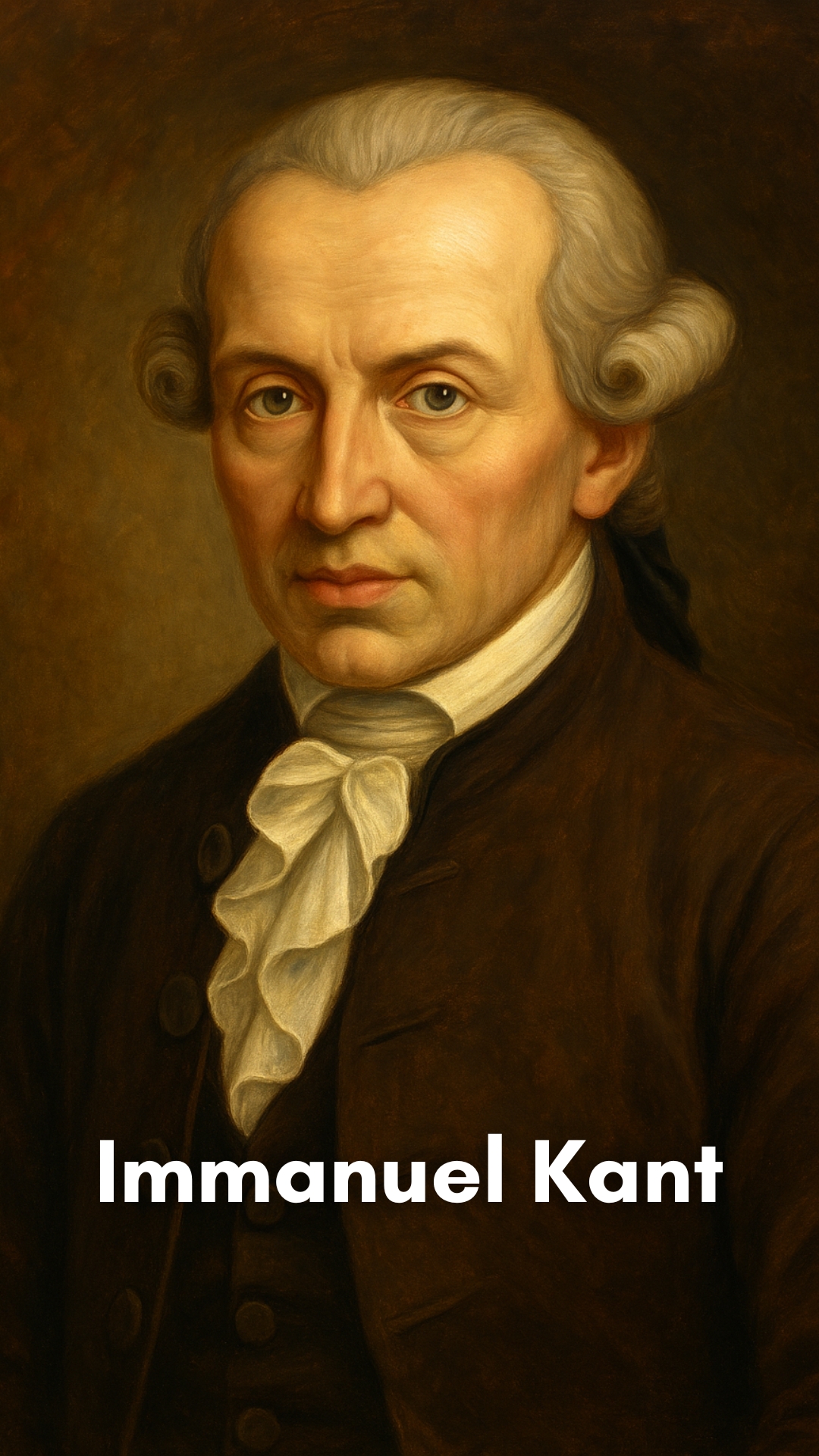
Kant mapped the mind like an explorer maps the stars, not to chart chaos, but to reveal order. With precision and depth, he redefined what we can know, how we must act, and why it matters. For him, morality wasn’t about reward or fear, it was about duty, freely chosen and universally just. He believed every person carried within them an unshakable worth, and that reason, when rightly used, could elevate humanity. Quiet, methodical, and relentless in thought, Kant didn’t just ask what truth is, he asked how we must live once we find it.
Place of Birth
Königsberg, Prussia (now Kaliningrad, Russia)
Birthday
April 22, 1724
Death
February 12, 1804
Legacy
Immanuel Kant was a German philosopher who revolutionized modern philosophy with his Critique of Pure Reason and ethical theories. He sought to bridge the gap between rationalism and empiricism, redefining the limits of human understanding and the nature of morality. His work established a new framework for metaphysics, ethics, and epistemology that shaped the Enlightenment and beyond.

Influence
Kant’s ideas profoundly influenced Western thought, laying the foundation for German Idealism and shaping modern philosophy, political theory, education, and psychology. Thinkers like Hegel, Schopenhauer, and Nietzsche responded to or built upon his work. His moral philosophy, especially the categorical imperative, remains central to discussions of ethics, duty, and human dignity.
Values & Beliefs
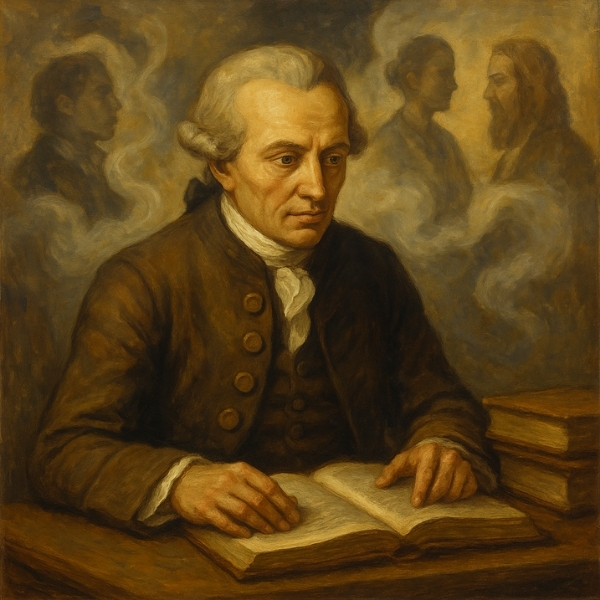
Kant believed in the power of reason, the moral worth of individuals, and the necessity of acting according to universal moral laws. He taught that actions should be guided by principles that could be willed as universal laws, not by consequences. Autonomy, duty, and respect for human dignity were at the heart of his ethics.

Most Famous For:
Writing Critique of Pure Reason
Writing Critique of Practical Reason
Writing Critique of Judgment
Influencing Enlightenment and post-Enlightenment philosophy
“Two things fill the mind with ever-increasing wonder and awe… the starry heavens above me and the moral law within me.”
 Ethan Townzen