
“It is no measure of health to be well adjusted to a profoundly sick society.”

About
He was crowned a world teacher and walked away from the throne. Jiddu Krishnamurti shattered expectations not with anger, but with clarity. He called on no gods, offered no systems, and asked no one to follow, only to observe, to question, to awaken. To him, truth could not be handed down or organized; it had to be seen directly, in the mirror of one’s own mind. With calm urgency, he spoke of freedom not political, but psychological the freedom to live without fear, without conditioning, without illusion. His message was simple: you are the revolution.
Place of Birth
Madanapalle, Andhra Pradesh, India
Birthday
May 11, 1895
Death
February 17, 1986 in Ojai, California, USA
Legacy
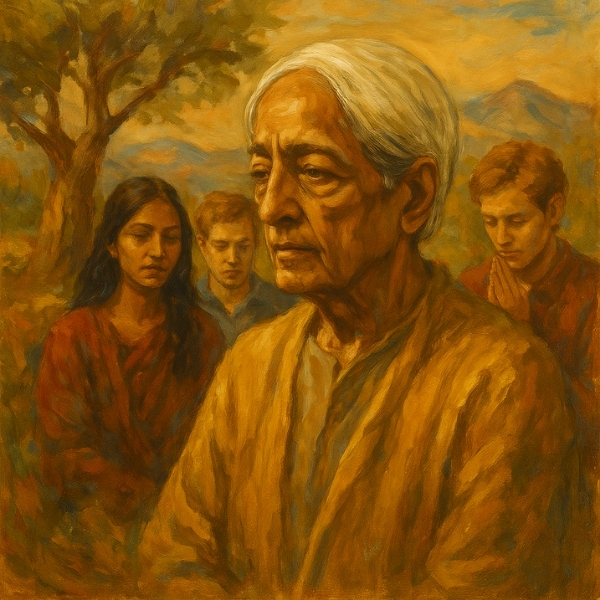
Jiddu Krishnamurti was an Indian philosopher, speaker, and writer who rejected organized religion, spiritual authority, and ideological systems. Originally groomed by the Theosophical Society as a “World Teacher,” he shocked followers by dissolving the Order of the Star in the East and urging individuals to seek truth through direct self-inquiry. His teachings focused on psychological freedom and transformation through awareness.
Influence
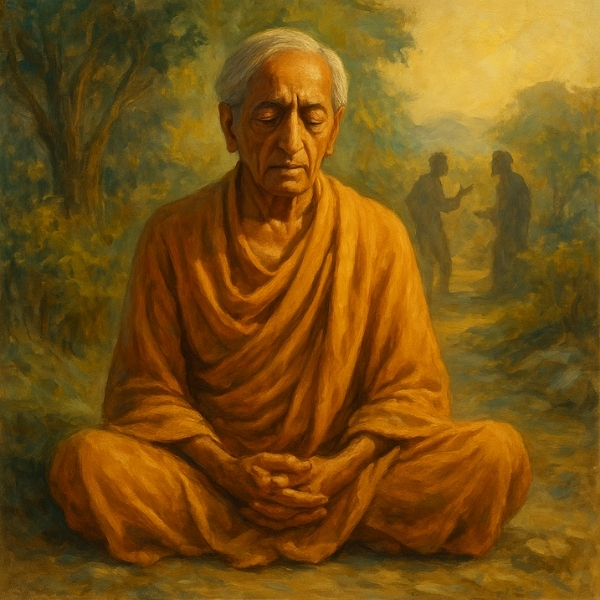
Krishnamurti influenced global thinkers, educators, and spiritual seekers, including Aldous Huxley, the Dalai Lama, Bruce Lee, and David Bohm. He founded schools around the world, emphasizing holistic education and inner freedom. His dialogues with scientists and spiritual leaders bridged Eastern wisdom with Western inquiry and continue to shape discussions on consciousness and human potential.
Values & Beliefs
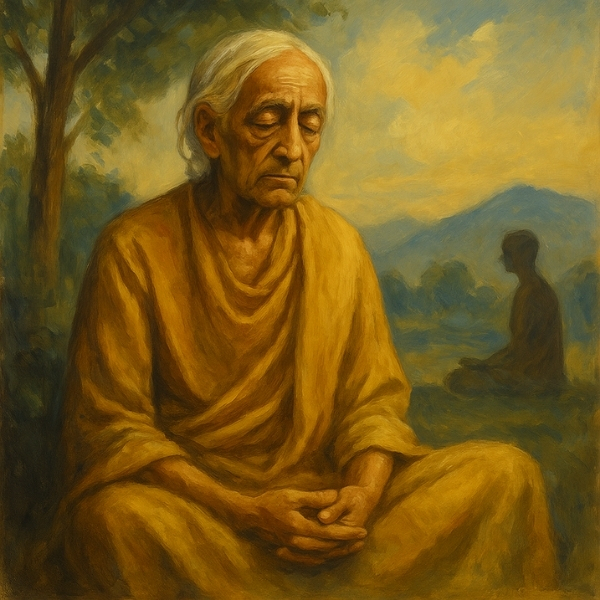
Krishnamurti emphasized radical freedom: the complete rejection of fear, authority, dogma, and conditioned thinking. He taught that truth is a pathless land and that real transformation begins with deep self-awareness. He believed that psychological change and peace could only come from understanding oneself, not through any system, guru, or belief.
Most Famous For:
Teaching psychological freedom and self-inquiry
Rejecting spiritual authority and organized religion
Founding schools focused on education of the whole being
Engaging in deep philosophical dialogues on consciousness
“The ability to observe without evaluating is the highest form of intelligence.”
 Ethan Townzen