
“Veni, vidi, vici.”
(“I came, I saw, I conquered.”)
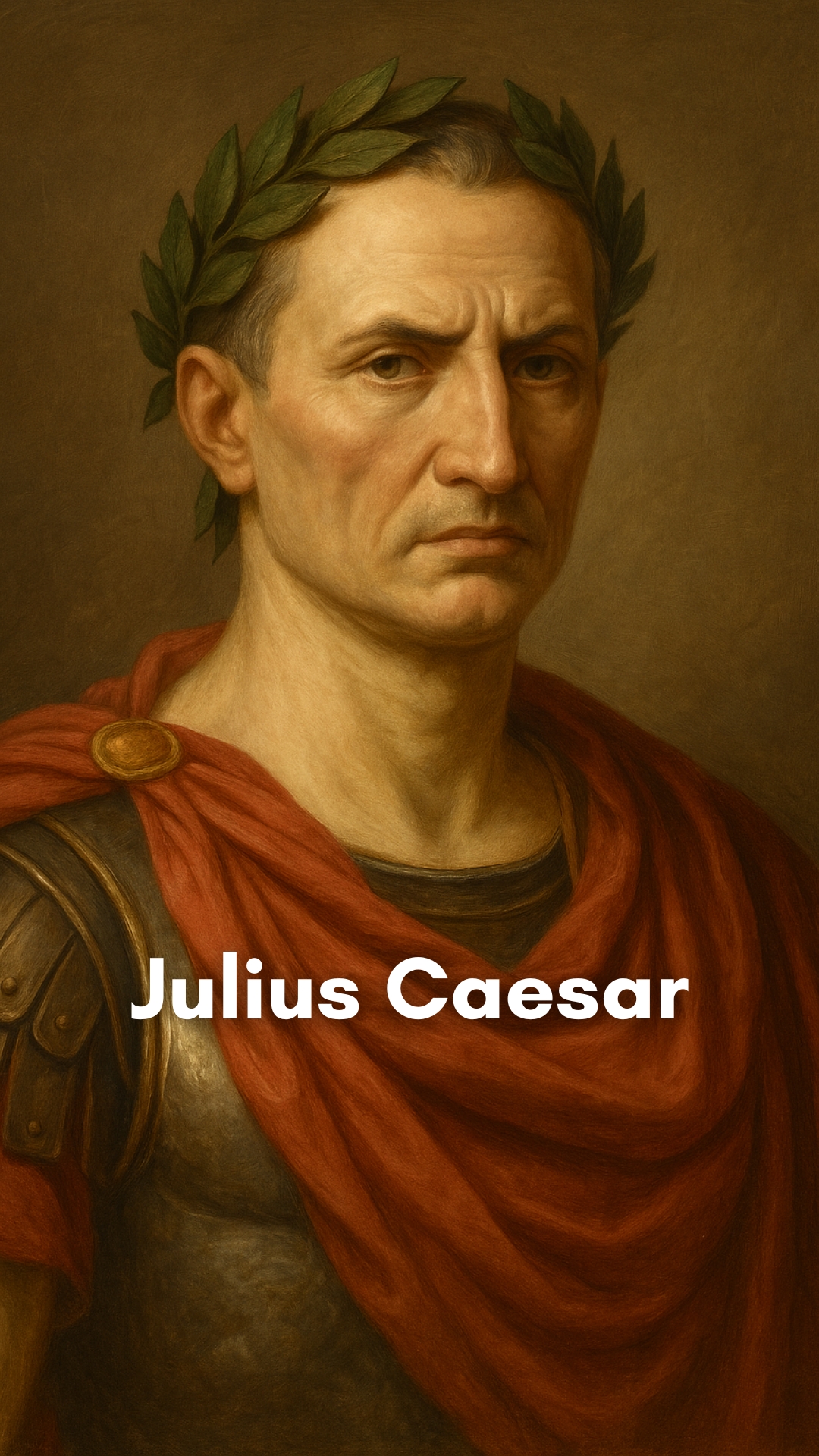
About
He came, he saw, he changed the world. Julius Caesar moved through history like a storm… brilliant, bold, and unstoppable. With sword and speech, he conquered Gaul, crossed the Rubicon, and rewrote the rules of Rome. He was more than a general; he was a strategist of destiny, reshaping politics, time, and empire itself. But the blade that built his legacy was matched by the knives that ended it. Betrayed by those he once led, Caesar fell, not as a failure, but as a force too great to contain. His life marked the end of a republic and the birth of an empire.
Place of Birth
Rome, Roman Republic
Birthday
July 12 or 13, 100 BCE
Death
March 15, 44 BCE in Rome, Roman Republic (assassinated on the Ides of March)
Legacy
Julius Caesar was a Roman general, statesman, and orator who transformed the Roman Republic into the foundations of the Roman Empire. A military genius and political powerhouse, he expanded Roman territory, reformed the calendar, and centralized authority… forever altering Rome’s structure. His assassination marked a turning point in world history, triggering the end of the Republic and the rise of imperial rule.

Influence
Caesar’s life and death shaped Western history, politics, and culture. His writings on warfare (Commentarii de Bello Gallico) remain key texts in military and Latin studies. His ambition, charisma, and reforms inspired leaders from Napoleon to modern statesmen. Shakespeare’s play Julius Caesar immortalized him as a symbol of power, betrayal, and fate.

Values & Beliefs
Julius Caesar believed in bold action, loyalty, and destiny. He valued discipline, courage, and adaptability, traits that defined his military campaigns and political strategies. Though accused of tyranny, he sought order and efficiency in governance, striving to bring unity to a fractured Rome. Caesar’s belief in greatness, even divine purpose, drove his rise, and ultimately led to his fall.

Most Famous For:
Conquering Gaul and crossing the Rubicon to challenge the Roman Senate
Centralizing power and becoming Dictator for Life
Reforming the Roman calendar (creating the Julian calendar)
Expanding Roman citizenship and implementing political reforms
“It is better to create than to learn! Creating is the essence of life.”
 Ethan Townzen