
“Fortune favors the brave.”

About
In the shadow of an emperor, Marcus Agrippa shaped an empire. Never seeking the spotlight, he let his victories speak, at Actium, where fleets clashed and history turned, and in Rome, where aqueducts, roads, and the first Pantheon rose under his watch. Loyal to Augustus, beloved by the people, Agrippa was the quiet architect of peace after chaos. With courage, vision, and humility, he proved that greatness doesn’t always wear a crown, sometimes, it builds one.
Place of Birth
Unknown (likely near Arpinum or Istria, Roman Republic)
Birthday
63 BCE
Death
12 BCE in Campania, Roman Empire
Legacy
Marcus Agrippa was a Roman general, statesman, and close friend of Emperor Augustus. He was the mastermind behind many of Rome’s greatest military victories, including the pivotal Battle of Actium. As a builder, he oversaw the original construction of the Pantheon and numerous aqueducts, baths, and roads that shaped the physical and civic landscape of Rome. His legacy is one of loyalty, engineering brilliance, and quiet but crucial influence behind Rome’s transformation into an empire.

Influence
Agrippa’s influence extended through both military and civic arenas. His strategic mind secured Octavian’s rule, helping establish the Roman Empire after years of civil war. His engineering projects improved the lives of Roman citizens, and his naval dominance redefined Roman maritime power. Later emperors modeled their military and civic projects on Agrippa’s blueprints.
Values & Beliefs
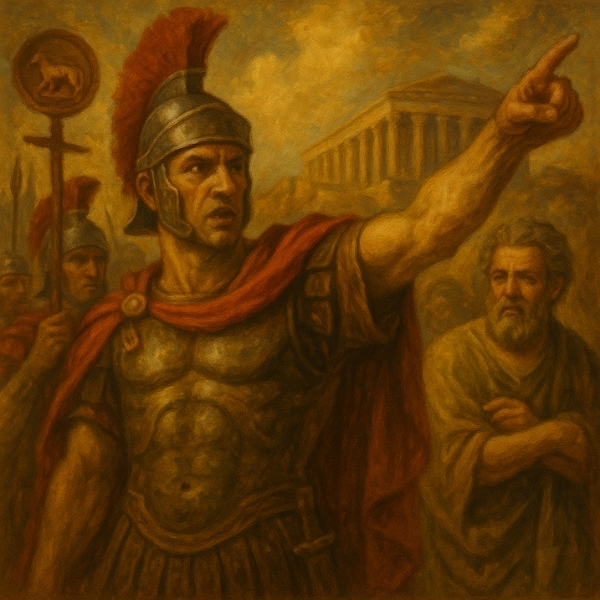
Agrippa valued duty, loyalty, and service over personal glory. He remained steadfastly committed to Augustus and the Roman state, often turning down triumphs and honors. A practical man of action, he believed in building… whether victories, cities, or alliances. His humility, efficiency, and effectiveness embodied Roman ideals of gravitas and virtus.
Most Famous For:
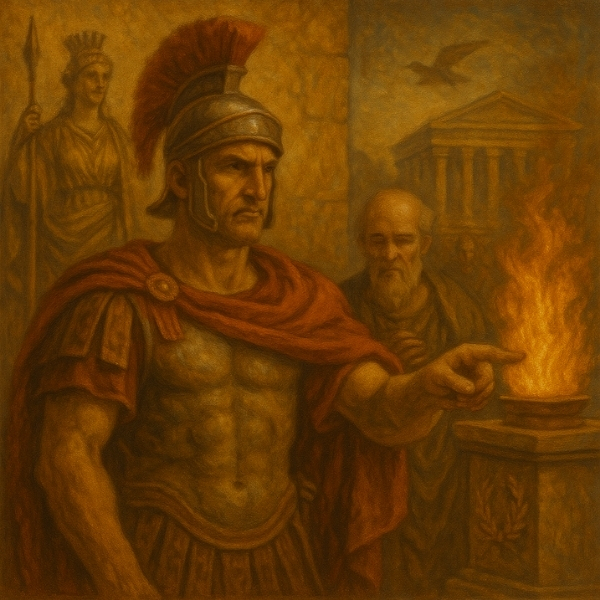
Defeating Mark Antony and Cleopatra at the Battle of Actium
Building the original Pantheon and major Roman aqueducts
Serving as right-hand man and general to Augustus
Elevating Rome through infrastructure, ports, and public works
“I do not care to be praised for anything I did not do. I am the arm, not the head.”
 Ethan Townzen