
“You have power over your mind, not outside events. Realize this, and you will find strength.”

About
Marcus Aurelius was a philosopher-king, a ruler who carried the weight of an empire while searching for wisdom in solitude. As Roman Emperor during times of war, plague, and political unrest, he turned inward, recording his thoughts in a private journal that would become Meditations… one of the most enduring works of Stoic philosophy. In those pages, he wrestled with ego, impermanence, and the demands of duty, striving always to live with virtue, clarity, and humility. Marcus believed that we are each responsible for our own character, and that strength lies not in conquest, but in self-mastery. His life is proof that leadership and philosophy can coexist, that even in power, one can remain a student of truth.
Place of Birth
Rome, Italy
Birthday
April 26, 121 CE
Death
March 17, 180 CE in Vindobona (modern-day Vienna, Austria)
Legacy
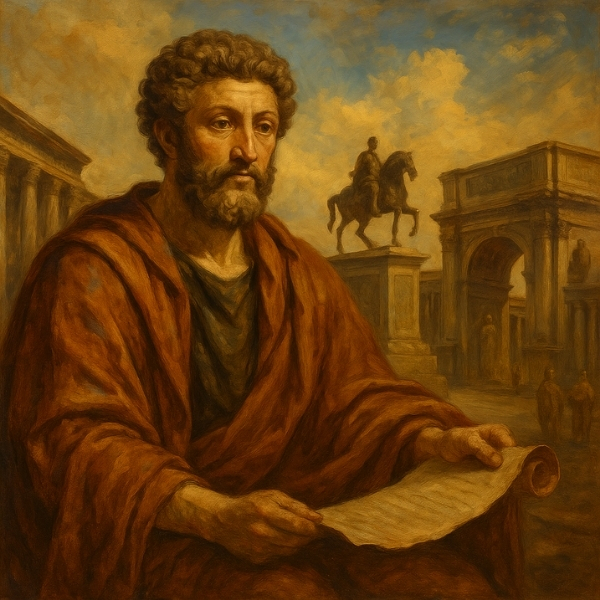
Marcus Aurelius was a Roman Emperor and Stoic philosopher whose reign is remembered as the last of the “Five Good Emperors.” He ruled with wisdom and restraint during a turbulent time and left behind Meditations, a private journal of philosophical reflections that has become one of the most beloved works of Stoic thought and personal ethics.
Influence
Marcus Aurelius’ Meditations has influenced generations of leaders, writers, and seekers of inner strength. His reflections on discipline, impermanence, and duty have found relevance in military leadership, business, therapy, and modern self-development. He represents the ideal of the philosopher-king: a ruler who governed not from ego, but from principle.

Values & Beliefs
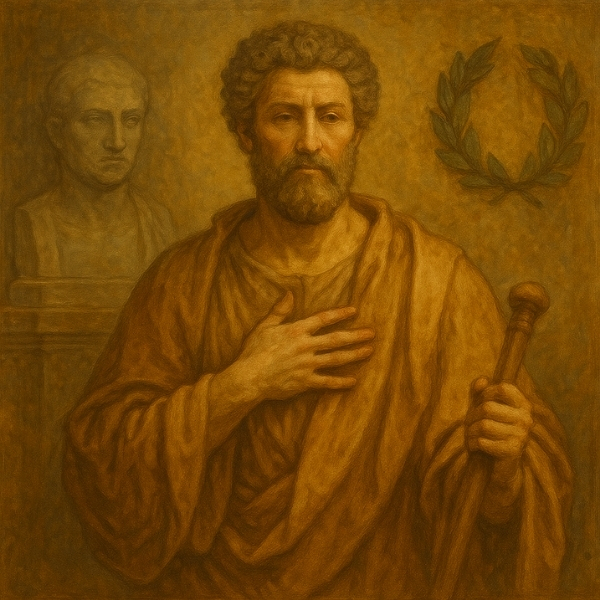
Marcus believed in personal responsibility, rationality, humility, and the acceptance of fate. He held that virtue was the only true good, and that external events were beyond our control and should be met with calm and courage. His Stoicism emphasized endurance, gratitude, and aligning one’s life with reason and nature.
Most Famous For:
Writing Meditations, a cornerstone of Stoic literature
Ruling Rome with wisdom, justice, and restraint
Embodying the Stoic ideal of the philosopher-king
Practicing daily reflection, discipline, and acceptance of fate
“Waste no more time arguing what a good man should be. Be one.”
 Ethan Townzen