
“The secret of getting ahead is getting started.”
About
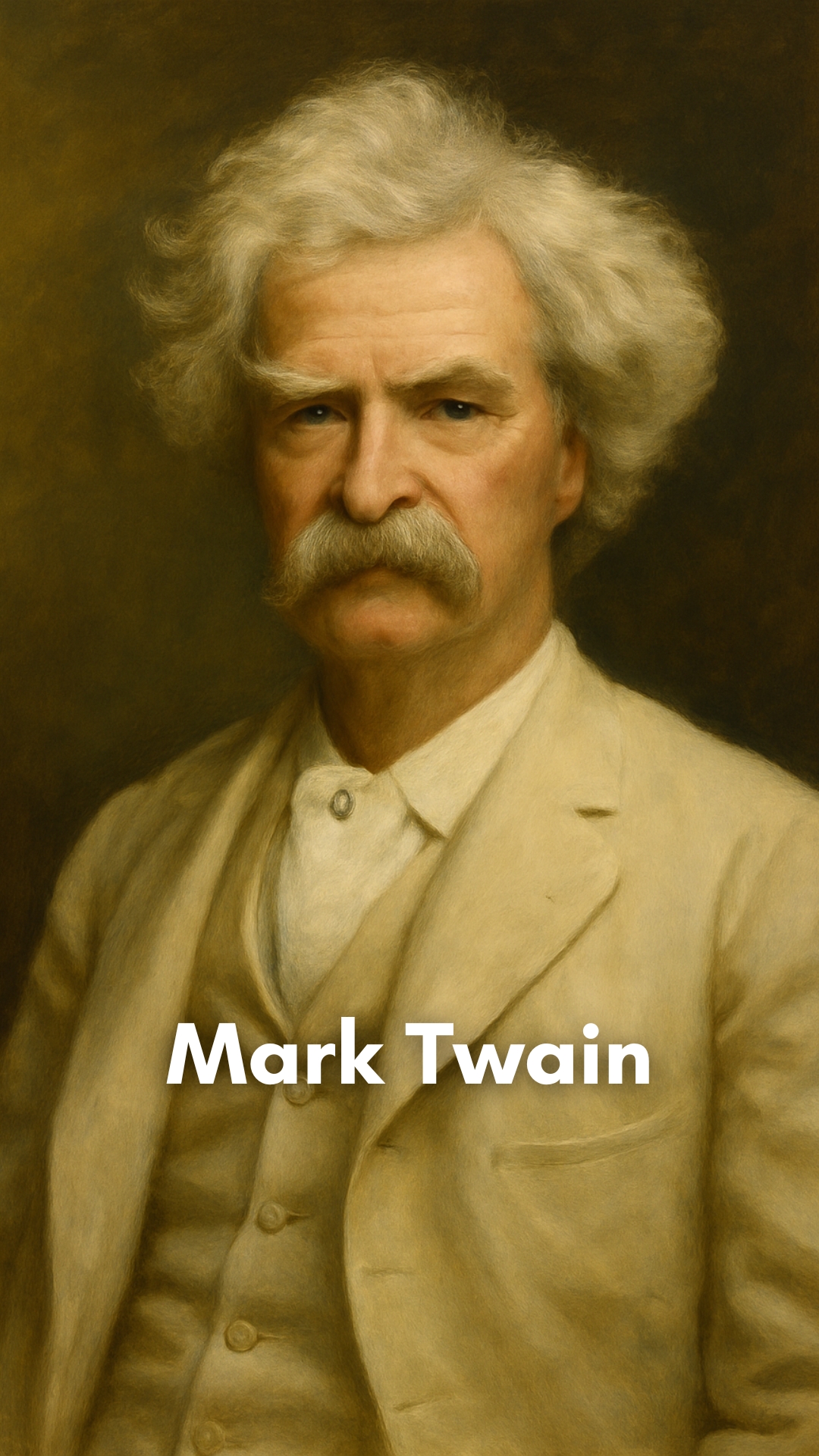
Mark Twain was more than a humorist… he was a cultural mirror, held up with a smirk and a sting. Born Samuel Clemens in a small Missouri town, he grew up along the Mississippi River, which became the lifeblood of his stories and the symbol of American freedom, conflict, and change. Through novels like The Adventures of Huckleberry Finn and Tom Sawyer, Twain blended sharp satire with vivid realism, capturing the voices of a divided, restless America. He challenged hypocrisy, questioned morality, and peeled back the polite veneer of society with wit that cut as deep as it charmed. Behind every joke was a conviction, that storytelling could confront injustice, awaken conscience, and connect us to something truer than pretense.
Place of Birth
Florida, Missouri, United States
Birthday
November 30, 1835
Death
April 21, 1910 in Redding, Connecticut, United States
Legacy
Mark Twain was an American writer, humorist, and cultural critic best known for creating timeless works like The Adventures of Tom Sawyer and Adventures of Huckleberry Finn. With his sharp wit and bold commentary, he helped define American literature and captured the contradictions of a young and growing nation. Beyond fiction, Twain stood as a moral voice who used satire to challenge injustice and hypocrisy.

Influence
Twain’s influence reached far beyond storytelling. His fearless critiques of racism, imperialism, and religious dogma inspired generations of writers, comedians, and public thinkers. Authors like Ernest Hemingway and William Faulkner credited him with shaping the American voice in literature. His bold use of dialect and realism opened the door for modern fiction rooted in authentic experience and social reflection.

Values & Beliefs
Twain valued truth, freedom of thought, and the power of humor as a tool for social change. He questioned dogma, mocked corruption, and championed the dignity of the individual. Deeply skeptical of institutions and power, Twain believed in speaking honestly, no matter the cost, and used storytelling as a mirror to reflect both the brilliance and folly of humanity.
Most Famous For:
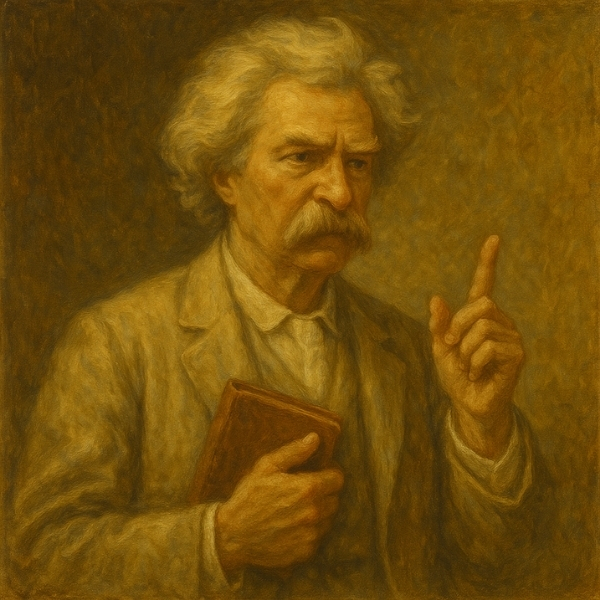
Using humor and satire to critique racism, imperialism, and organized religion
Shaping the American literary voice with realism and regional dialect
Inspiring future generations of writers, thinkers, and truth-tellers
“It’s not the size of the dog in the fight, it’s the size of the fight in the dog.”
 Ethan Townzen