
“I have a dream that one day this nation will rise up and live out the true meaning of its creed: ‘We hold these truths to be self-evident, that all men are created equal.’”

About
Martin Luther King Jr. was a preacher of peace and a prophet of justice, a man who transformed the landscape of American history through the quiet power of conviction and the thunder of moral clarity. Born into the deep injustice of segregation, he rose to lead a movement not with violence, but with vision rooted in faith, guided by love, and armed with an unshakable belief in human dignity. His “I Have a Dream” speech stirred the soul of a divided nation, while his marches, boycotts, and letters called the world to a higher standard of justice. He faced prison, threats, and ultimately assassination, yet never strayed from the path of nonviolence. Through courage, sacrifice, and a deep sense of purpose, King showed that true strength is measured not by force, but by the ability to love in the face of hatred, and to keep walking forward.
Place of Birth
Atlanta, Georgia, USA
Birthday
January 15, 1929
Death
April 4, 1968 (St. Joseph’s Hospital, Memphis)
Legacy
King’s legacy is global and enduring. He played a central role in the passage of the Civil Rights Act of 1964 and the Voting Rights Act of 1965. His “I Have a Dream” speech remains one of the most iconic orations in American history. Awarded the Nobel Peace Prize at 35, he became a symbol of peace, justice, and the transformative power of love in public life. His birthday is honored as a national holiday in the U.S.

Influence
MLK inspired generations of activists across racial, religious, and national lines. His strategies shaped movements for justice from South Africa to India and beyond. Modern racial justice, nonviolent resistance, and social justice movements frequently draw on his words, methods, and vision. He helped embed the fight for civil rights into the conscience of a nation.

Values & Beliefs
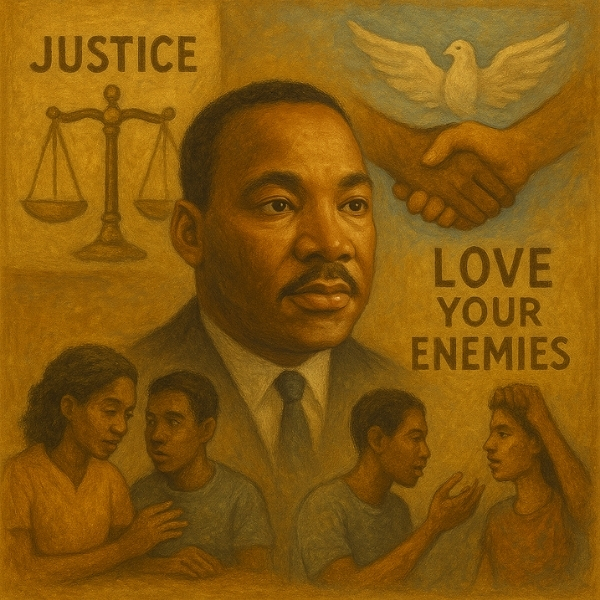
King believed in the power of nonviolence, the dignity of every human being, and the necessity of justice through love. Rooted in his Christian faith, he emphasized compassion, forgiveness, and collective progress. He advocated for economic equity, political inclusion, and moral clarity. For King, peace was not merely the absence of conflict, but the presence of justice.
Most Famous For:
Leading the civil rights movement and championing nonviolent resistance
Delivering the iconic “I Have a Dream” speech during the 1963 March on Washington
Winning the Nobel Peace Prize in 1964
Helping pass the Civil Rights Act (1964) and Voting Rights Act (1965)
Founding the Southern Christian Leadership Conference (SCLC)
“Injustice anywhere is a threat to justice everywhere.”
 Ethan Townzen