
“If you accomplish something good with hard work, the labor passes quickly, but the good endures.”

About
He didn’t just teach Stoicism… he lived it. Musonius Rufus believed wisdom wasn’t locked in books or lectures, but found in how you rise each day, how you treat others, and how you hold to virtue when it’s inconvenient. He taught that philosophy was for everyone, women, men, rich, poor and that discipline, not luxury, builds strength. In a noisy world, he taught the quiet power of integrity.
Place of Birth
Volsinii, Etruria (modern-day Bolsena, Italy)
Birthday
30 CE
Death
100 CE
Legacy
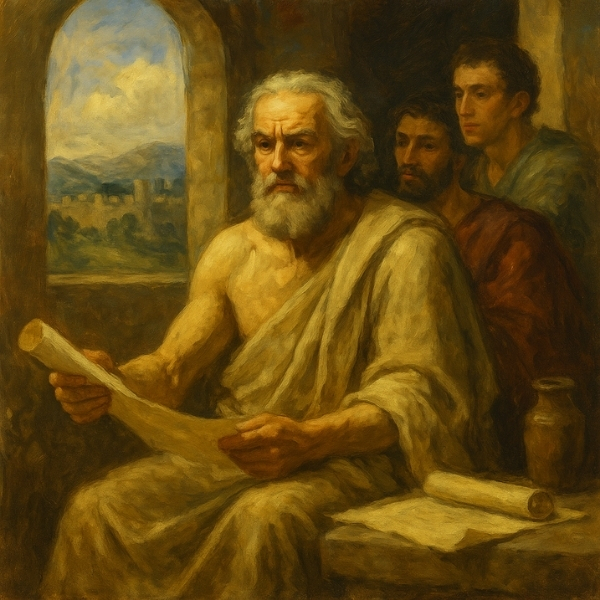
Musonius Rufus was a prominent Roman Stoic philosopher, known for emphasizing the practical application of philosophy in daily life. He was considered one of the most important Stoic teachers of his time and taught that philosophy should be lived, not just studied. Though less famous than Seneca or Epictetus, his teachings strongly influenced the Stoic tradition, especially through his student Epictetus.
Influence
Musonius’ emphasis on equality, simplicity, and virtue resonated with both ancient and modern thinkers. His progressive views on the education of women, discipline, and moral training helped shape the moral outlook of Stoicism in the Roman Empire. His student Epictetus would go on to become one of the most important Stoic voices, continuing Rufus’ legacy through his own writings.

Values & Beliefs
Musonius Rufus believed that philosophy should guide every aspect of life. He taught the importance of endurance, self-control, and living in harmony with nature. He held that virtue is the same for men and women, that wealth and comfort are distractions from moral development, and that true happiness comes from living a virtuous life through consistent effort and reflection.

Most Famous For:
Teaching practical, action-based Stoicism
Mentoring Epictetus
Advocating for the education of women in philosophy
Emphasizing the importance of virtue over comfort or status
“Practice is more important than theory.”
 Ethan Townzen