
“Impossible is a word to be found only in the dictionary of fools.”

About
Napoleon Bonaparte rose from humble Corsican roots to crown himself Emperor of the French, defying monarchies and rewriting the map of Europe. A master of military innovation and political reform, he led lightning-fast campaigns from Italy to Egypt and across the continent, toppling empires with unmatched strategic genius. At home, he reshaped French society through the Napoleonic Code, laying the groundwork for modern civil law. But his ambition burned as fiercely as his brilliance, and after the disastrous invasion of Russia and defeat at Waterloo, he was exiled not once, but twice. Still, Napoleon’s legacy endures as both warning and wonder: a reminder of how one man’s vision can build nations, challenge the old world, and collapse under the weight of its own greatness.
Place of Birth
Ajaccio, Corsica, France
Birthday
August 15, 1769
Death
May 5, 1821 in Longwood, Saint Helena
Legacy
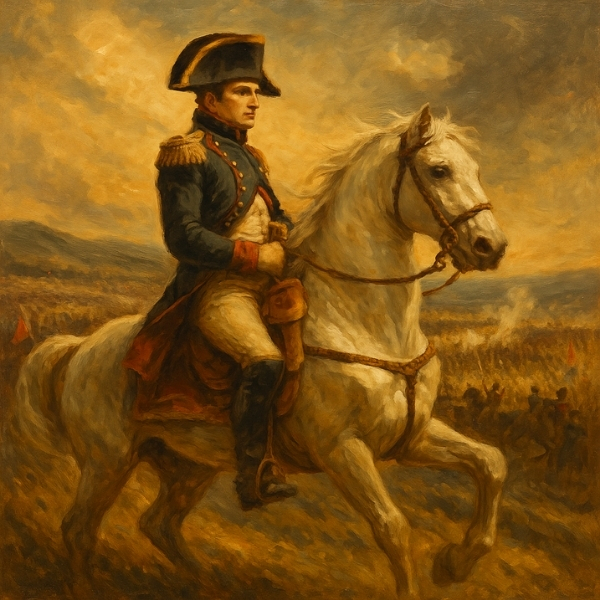
Napoleon Bonaparte was a French military leader and emperor whose ambitions reshaped the political and social landscape of Europe. Rising to power during the French Revolution, he crowned himself Emperor of the French in 1804 and built a vast empire through conquest and reform. Despite his ultimate defeat, Napoleon left a lasting legacy through the Napoleonic Code, military innovation, and his enduring influence on modern statecraft.
Influence
Napoleon’s influence touched nearly every corner of Europe. He redefined modern warfare through speed, strategy, and adaptability, and his legal reforms became the foundation for many civil law systems worldwide. His reshaping of European borders and challenge to monarchies fueled both nationalism and liberalism, sparking revolutions and resistance across continents for decades to come.

Values & Beliefs
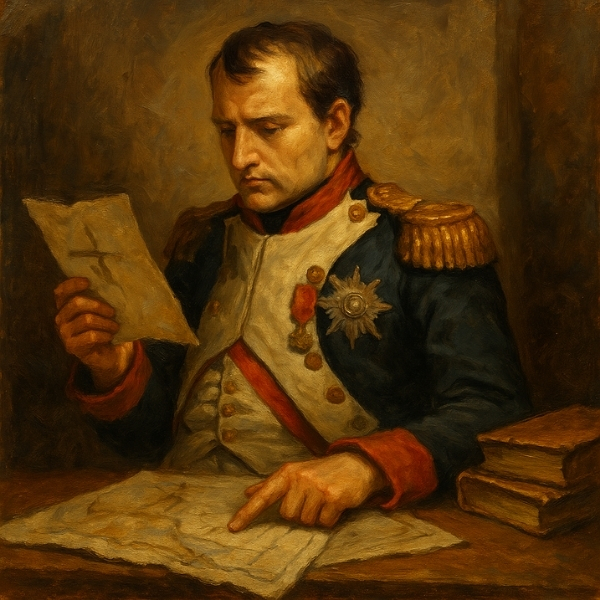
Napoleon valued merit, ambition, and order. A man of Enlightenment thought and military discipline, he believed in strong centralized government, secular education, and a legal system based on rational principles. Though often accused of autocracy, he rejected hereditary privilege in favor of ability and results, rising from outsider to emperor through intellect, charisma, and force of will.
Most Famous For:
Becoming Emperor of the French and conquering much of Europe
Leading decisive campaigns such as Austerlitz, Jena, and Wagram
Establishing the Napoleonic Code, a lasting legal legacy
Redefining modern military strategy and statecraft
“A leader is a dealer in hope.”
 Ethan Townzen