
“Let everything happen to you: beauty and terror. Just keep going. No feeling is final.”
About
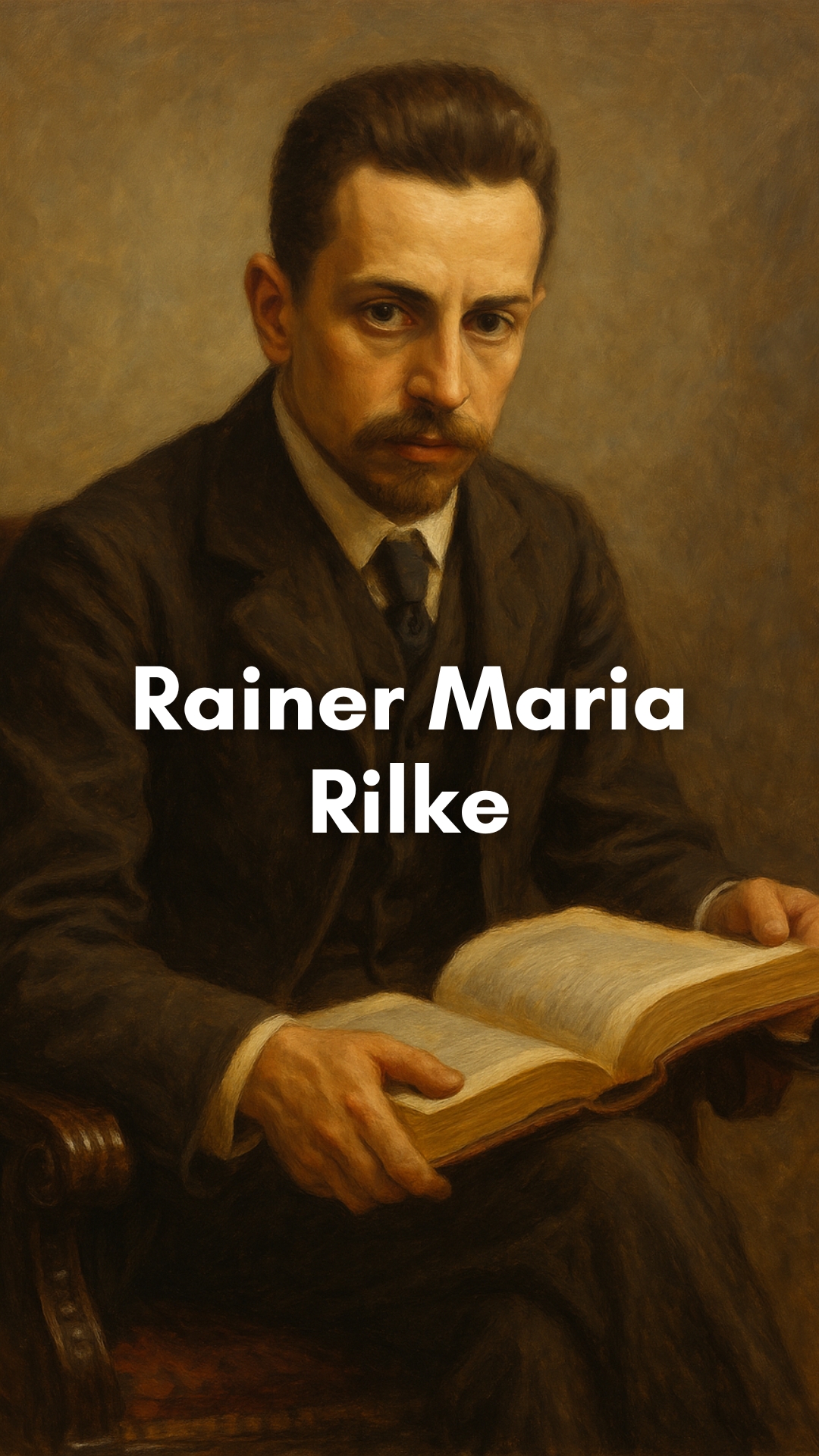
Rainer Maria Rilke turned the depths of the soul into poetry. With every line, he explored love, solitude, death, and transformation, not as abstractions, but as intimate companions. His Letters to a Young Poet offered timeless counsel on creativity and suffering, while the Duino Elegies and Sonnets to Orpheus gave voice to the invisible. Rilke didn’t just write about life, he revealed its hidden currents, teaching us to “live the questions” with courage and grace.
Place of Birth
Prague, Bohemia (now Czech Republic)
Birthday
December 4, 1875
Death
December 29, 1926 in Montreux, Switzerland
Legacy
Rainer Maria Rilke was an Austrian poet and novelist whose profound, lyrical works reshaped modern poetry. Through collections like The Duino Elegies and Letters to a Young Poet, Rilke explored existential depth, art, and the human condition. His legacy endures as one of the most spiritual and inward-looking voices of European literature, revered by readers seeking meaning beyond surface emotion.

Influence
Rilke’s influence stretches across literature, philosophy, and psychology. He inspired writers like W.H. Auden and philosophers such as Martin Heidegger. His letters and poetry have been quoted by artists, spiritual seekers, and creatives alike for their contemplative power. Rilke’s exploration of solitude, transformation, and the creative process shaped the inner lives of 20th-century artists and continues to do so today.
Values & Beliefs
Rilke valued solitude, inner growth, and the sacredness of life’s mysteries. He believed in embracing uncertainty, facing suffering, and using art as a path to personal revelation. Rilke saw beauty and pain as interconnected forces, both essential to the soul’s evolution. Above all, he trusted the process of becoming, encouraging others to live their questions deeply.
Most Famous For:
Writing Letters to a Young Poet, The Duino Elegies, and The Book of Hours
Exploring existential, spiritual, and emotional themes through poetic language
Influencing modern poetry and philosophical thought on solitude and creativity
Bridging mysticism, art, and personal introspection in his writing
“The only journey is the one within.”
 Ethan Townzen