
“Although they are only breath, words which I command are immortal.”
About
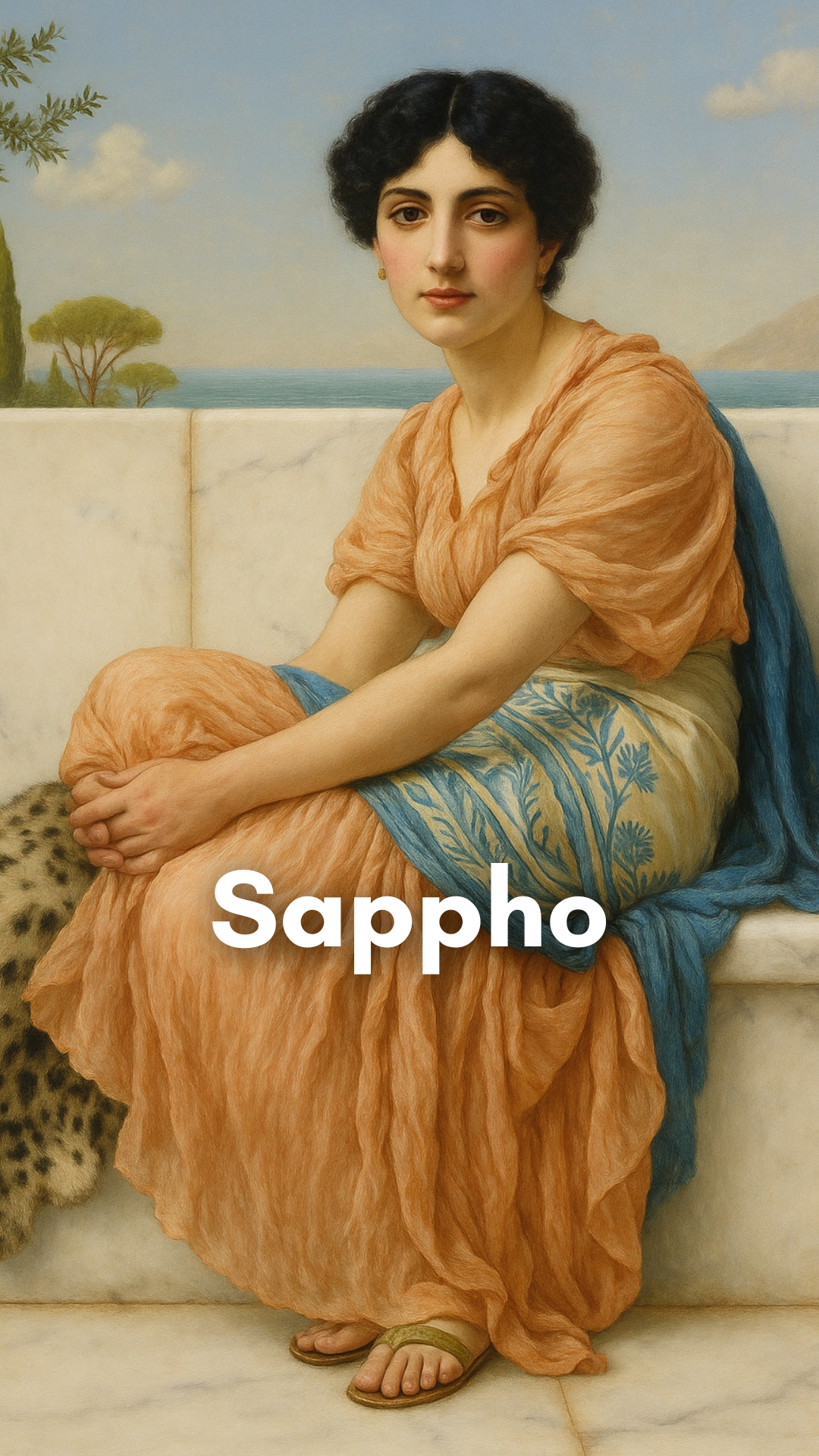
Sappho sang from the edge of the Aegean… her words intimate, luminous, and enduring. Living on the island of Lesbos in the 6th century BCE, she wrote lyric poetry that captured the fire of love, the ache of longing, and the bonds between women. Though much of her work survives in fragments, each line pulses with emotional clarity and timeless vulnerability. Revered by the ancients as the “Tenth Muse,” Sappho gave voice to the personal in a world of epic heroes.
Legacy
Sappho’s legacy is one of poetic brilliance and cultural resonance. She was so influential that Plato called her the “Tenth Muse.” Though most of her work survives only in fragments, her voice endures as a symbol of lyrical mastery and emotional depth. She left an indelible mark on literature, feminism, and LGBTQ+ history. The term “sapphic” – used to describe romantic relationships between women, stems directly from her name and legacy.
Influence
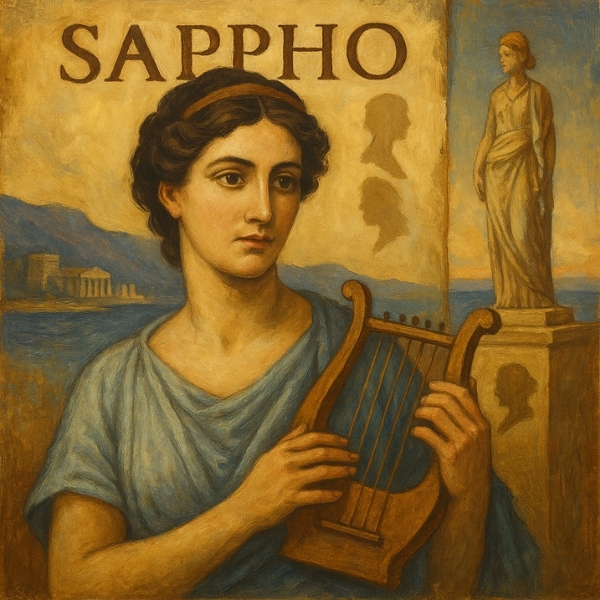
Sappho shaped the lyrical tradition of Western poetry, inspiring writers from Catullus to Tennyson and beyond. Her honest exploration of female desire and emotional vulnerability broke boundaries in a male-dominated literary world. In modern times, she has become a powerful figure in queer history, feminist scholarship, and the reexamination of lost or silenced voices in literature.
Values & Beliefs
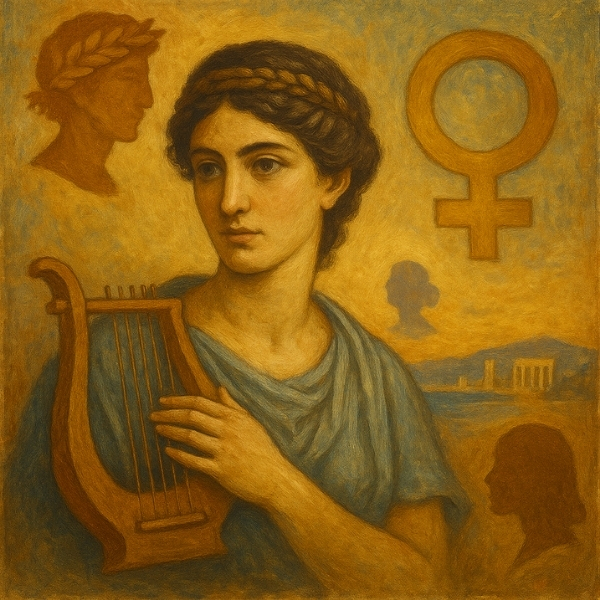
Sappho’s poetry reveals a belief in the sacredness of love, beauty, and the fleeting nature of life. She valued emotional truth and individual expression, and her works elevate personal feeling to an art form. She embraced complexity, joy and heartbreak, passion and introspection, and saw no shame in vulnerability or affection. Her writing championed the internal world, especially from a woman’s perspective, long before it was given literary weight.
Most Famous For:
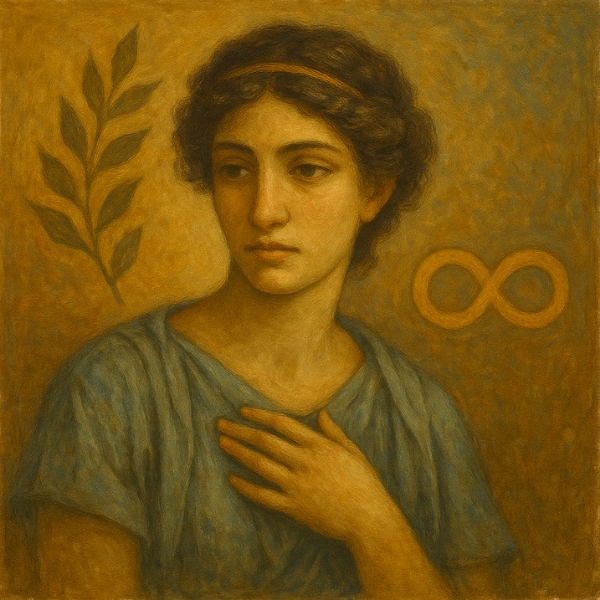
One of the earliest and greatest lyric poets in Western history
Writing poetry about female love and longing, influencing generations
Originating the sapphic stanza, still used in poetry today
Serving as a cultural icon of LGBTQ+ history and feminist literature
Being hailed as the “Tenth Muse” by ancient scholars and philosophers
“Someone, I tell you, in another time will remember us.”
 Ethan Townzen