
“The supreme art of war is to subdue the enemy without fighting.”

About
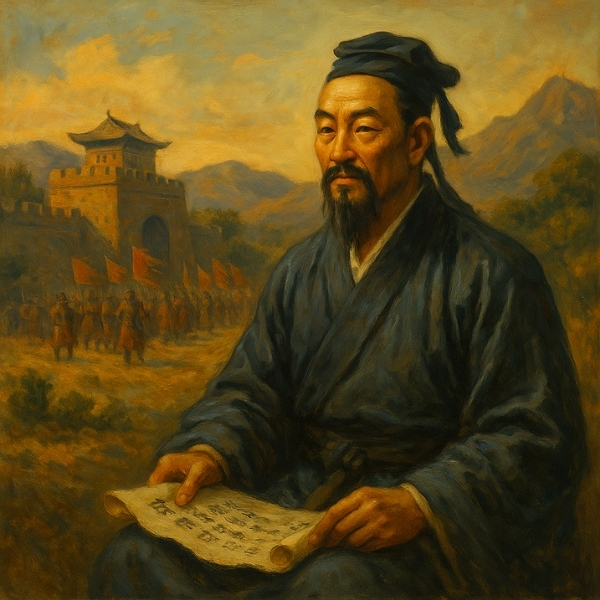
Sun Tzu was the invisible hand behind countless victories. A master strategist of ancient China, he distilled the art of war into timeless wisdom through The Art of War. For him, the best battle was the one never fought, the greatest warrior the one who conquered without a sword. His teachings on deception, timing, and self-knowledge became the silent armor of generals, CEOs, and leaders for over two thousand years. In every realm of conflict, Sun Tzu whispers, “Know yourself, know your enemy.”
Place of Birth
State of Qi (modern-day Shandong Province, China)
Birthday
544 BCE
Death
496 BCE
Legacy
Sun Tzu is best known as the author of The Art of War, a timeless military treatise that blends strategic insight with philosophical depth. His work became a foundational text not only in military studies but in leadership, business, and diplomacy. Centuries later, The Art of War is still read worldwide for its wisdom on strategy, preparation, and understanding human behavior.
Influence
Sun Tzu’s influence extends far beyond ancient battlefields. His principles have been adopted by generals, emperors, entrepreneurs, athletes, and politicians. His emphasis on intelligence, adaptability, and timing has shaped strategies across cultures, including modern warfare, business negotiations, and personal development.

Values & Beliefs
Sun Tzu valued clarity, patience, discipline, and indirect strength. He believed true victory lies not in brute force, but in strategy… in knowing yourself, knowing your enemy, and exploiting timing and terrain. His worldview promotes careful observation, flexibility, and the ability to win without destruction.
Most Famous For:
Writing The Art of War
Revolutionizing strategic thinking in military and non-military fields
Emphasized the importance of preparation, deception, and awareness
Inspired global leaders across centuries
“All warfare is based on deception.”
 Ethan Townzen