
“In every battle there comes a time when both sides consider themselves beaten, then he who continues the attack wins.”

About
Ulysses S. Grant was quiet in demeanor but thunderous in action. A West Point graduate who struggled in civilian life, he returned to service during the Civil War and rose through the ranks with relentless resolve. As the Union’s top general, he delivered key victories at Vicksburg and Appomattox, helping to preserve the nation. Later, as President, he fought for Reconstruction and civil rights, even as scandal swirled around his administration. Through triumph and trial, Grant embodied perseverance, humility, and a steadfast belief in unity and justice.
Place of Birth
Point Pleasant, Ohio, United States
Birthday
April 27, 1822
Death
July 23, 1885 in Wilton, New York, United States
Legacy
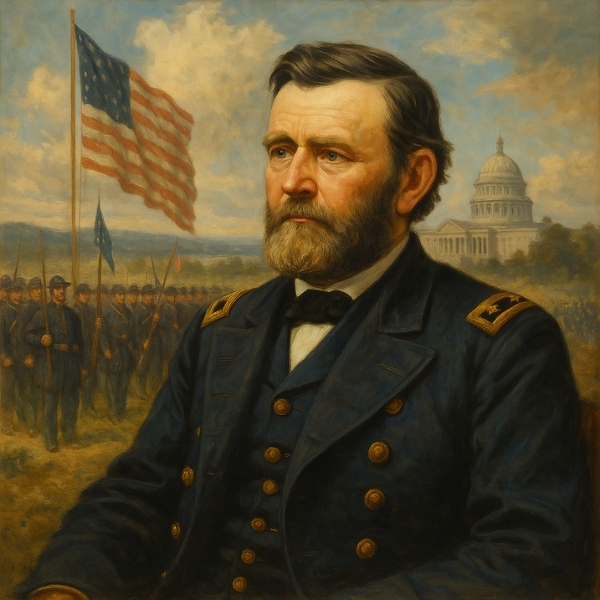
Ulysses S. Grant was the commanding general who led the Union Army to victory during the American Civil War and later served two terms as the 18th President of the United States. A steadfast and tenacious leader, Grant helped preserve the Union and was instrumental in implementing Reconstruction efforts to protect the rights of newly freed African Americans. Though his presidency faced political scandals, his later years and memoirs earned him renewed admiration and respect.
Influence
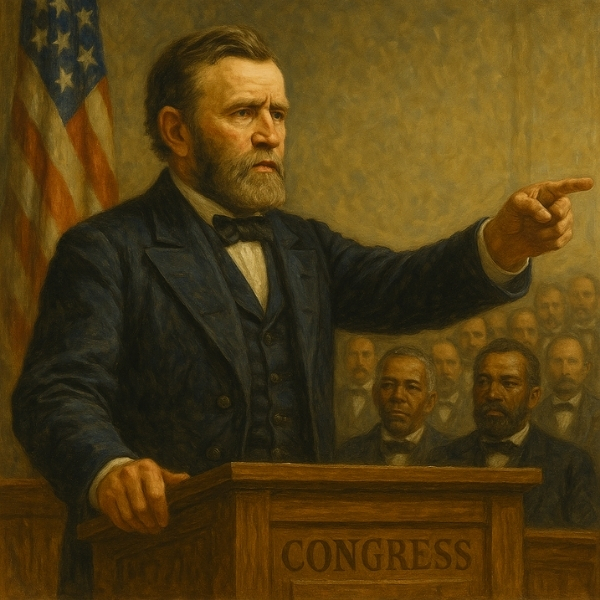
Grant’s military strategies, particularly his use of relentless pressure and coordinated offensives, changed the nature of modern warfare. As president, his support for the 15th Amendment and crackdown on the Ku Klux Klan marked early steps toward civil rights. His posthumously published memoirs, written while dying of cancer, became a defining work of American literature and secured his place as one of the nation’s most reflective and honest leaders.
Values & Beliefs
Grant valued perseverance, unity, and equality. Quiet in demeanor but resolute in purpose, he believed in fulfilling duty with integrity and modesty. He opposed slavery, supported civil rights, and sought peace through strength. His leadership was guided by a calm confidence, loyalty to the Union, and a belief that justice must follow victory.
Most Famous For:
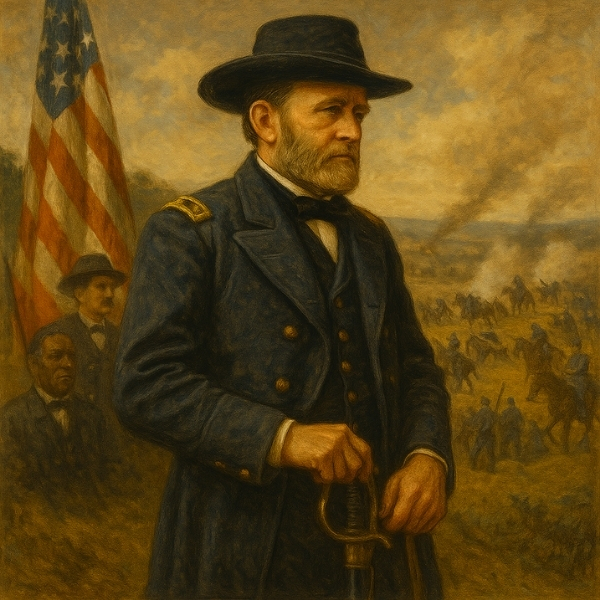
Leading the Union Army to victory in the Civil War
Accepting Robert E. Lee’s surrender at Appomattox Court House in 1865
Serving as President of the United States during Reconstruction
Fighting to protect the rights of freed slaves and suppress the KKK
“The friend in my adversity I shall always cherish most. I can better trust those who helped to relieve the gloom of my dark hours than those who are so ready to enjoy with me the sunshine of my prosperity.”
 Ethan Townzen