
“Man conquers the world by conquering himself.”

About
Zeno of Citium laid the cornerstone of Stoicism on the painted porch of Athens. Shipwrecked but not broken, he turned misfortune into philosophy, crafting a worldview grounded in reason, virtue, and resilience. Drawing from Socrates and the Cynics, Zeno taught that true freedom lies in mastering oneself, not the world. His Stoic school became a refuge for emperors, slaves, and seekers alike, offering calm in chaos. In a world of storms, Zeno showed how to live like a steady flame, unshaken, clear, and in harmony with nature.
Place of Birth
Citium, Cyprus (then part of the Greek world)
Birthday
334 BCE
Death
262 BCE in Athens, Greece
Legacy
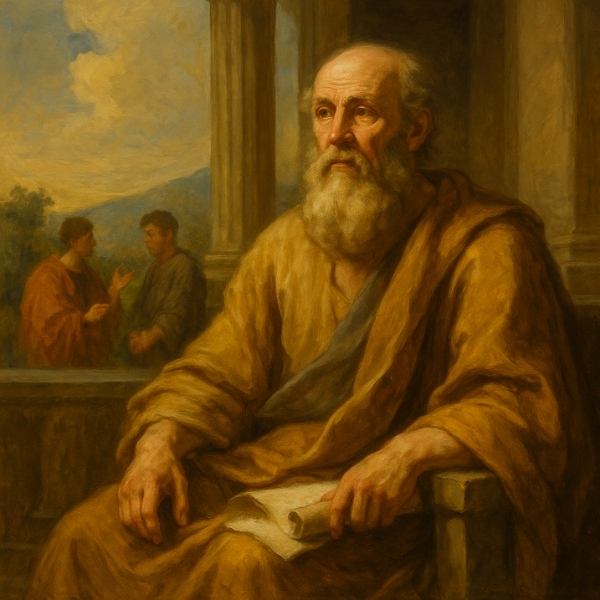
Zeno of Citium was the founder of Stoicism, one of the most enduring schools of ancient philosophy. Teaching in the Stoa Poikile (Painted Porch) in Athens, he created a system based on reason, virtue, and alignment with nature. His teachings formed the foundation that later Stoics like Epictetus, Seneca, and Marcus Aurelius would expand upon.
Influence
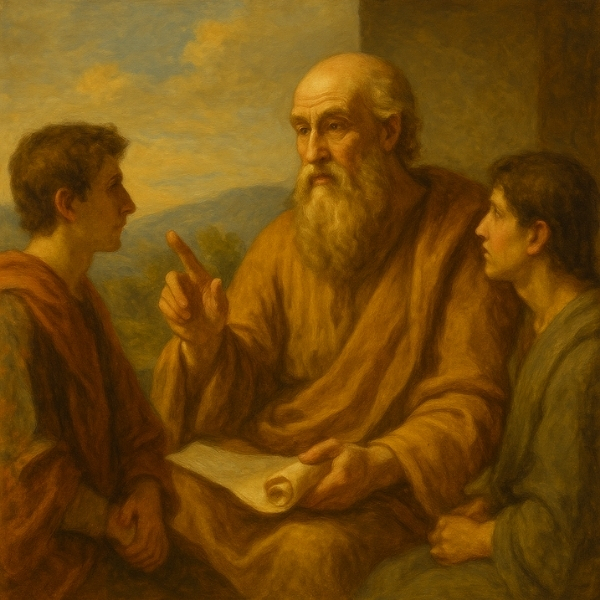
Zeno’s Stoicism became a dominant philosophy in the Greco-Roman world and shaped ideas about resilience, ethics, and rational living for centuries. His work inspired not only ancient philosophers but also modern thinkers, leaders, athletes, and entrepreneurs seeking clarity, discipline, and peace amidst chaos.
Values & Beliefs
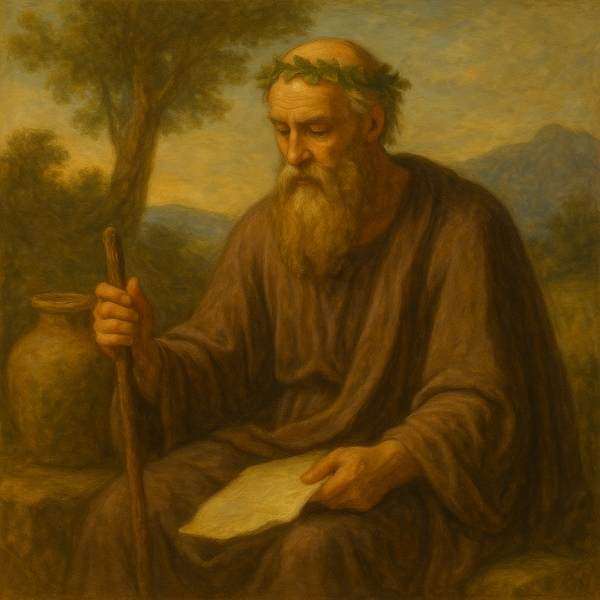
Zeno believed that the path to freedom and fulfillment lay in mastering one’s desires, accepting fate, and living according to nature. He emphasized self-control, virtue as the highest good, and the importance of reason. For Zeno, philosophy was not mere theory… it was a way to live nobly, regardless of circumstances.
Most Famous For:
Founding the Stoic school of philosophy
Teaching at the Stoa Poikile in Athens
Emphasizing virtue, rationality, and emotional discipline
Laying the groundwork for Roman Stoicism and modern practical philosophy
“Happiness is a good flow of life.”
 Ethan Townzen